Roofing styles and materials
From traditional composition shingles to premiere tiles, Fidler offers all the options in greater kansas city.
Fidler on the Roof KC specializes in providing the customized roofs homeowners are seeking, whether it’s made of tile, stone, composition or other materials. From traditional shingles to premiere tiles, Fidler offers all the options for homes, businesses and institutions in Greater Kansas City, Missouri and Kansas.


You wanted to remodel your kitchen, not replace your roof
Nature doesn’t negotiate, so use this opportunity to turn a setback into a standout.
Many Kansas City homeowners have a bucket list of improvements they’re eager to make. These may include renovating the hall bath, revamping the kitchen or expanding the living room. Then comes a storm and – crack! – a sycamore tree is lodged in your attic.
But maybe you weren’t that “lucky.” When a symphony of hail strikes, it leaves no shingle untouched. The roof has been hammered by a thousand speeding ice pellets. After a consult with the insurance company, it’s replacement time.
Acid reflux, anyone?
At Fidler on the Roof KC, we understand that homeowners, businesses and houses of worship seldom schedule a roof repair or replacement. Instead, there’s usually an (undesired) event that triggers it. This includes the uneventful wear-and-tear of time, which makes itself known by the drip, drip, drip that shows up in stains and spongy ceilings.
When a roof is compromised, there is certainly a sense of urgency. The pressure to resolve the problem may be heightened during the extremes of a season. But this challenge is also an opportunity to consider the roof you really want. It may be something you’ve never thought about before. Consider: You’ll only have a few opportunities in life to imagine your ideal roof. We encourage you to make the most of it.
While composition (asphalt shingles) are the most popular option in the United States, they’re only one choice among many. But even if you want to stick with composition, you can make the most of myriad options for colors, textures and styles.
From there, roofs fall into two categories: those that can support heavy materials and those that can’t. There are dynamic options for both.
Standard structural support
Homes not built for tonnage have several aesthetic options. These include stone-coated steel, standing-seam panels, synthetic wood shake and synthetic tile.
Heavy-duty structural support
This type of engineering opens even more possibilities. Options include clay tile, cement tile and slate. If you’re sold on one of these styles but don’t live in a home that can support it, there may be options. Depending on the home, structural support may be added to support heavier roofing.
Other factors
Each homeowner has unique preferences and priorities. A re-roofing decision can include factors such as:
Energy savings
Durability and longevity
Fire resistance
Curb appeal
Sustainability and recycling
Weather and mold resistance
Maintenance expenses
Each roofing material has different qualities, which may reflect more or less of one of these factors. That’s where we come in.
Fidler on the Roof KC provides 100% free consultation, estimates and inspections for all types or roofs. We understand the urgency – every building needs a roof! But we also see the opportunity and want to help you make the most of the moment.
Let us know how we can be of service today.
What type of roof should you choose?
When it comes to choosing a roof, there are three basic considerations: budget, personal preference and engineering.
Most roofing types can be equally impact resistant. There are multiple durability grades for each surface, ranging from 1 to 4, with 4 being the most durable. That means a grade 4 composition roof is more durable than a grade 3 tile roof. So it’s not a matter of materials, it’s a matter of the durability rating of the type of roofing you choose.
With all things being equal, you can have the type of roof you want. Budget is a factor for everyone, of course, or we’d all have gold-plated roofs. In general, composition roofs are the most economical. However, we encourage you to price out the options. You may be surprised.
Can my roof support it?
The engineering of your home is another factor. Not every home can support every material. Slate and cement materials, for example, can weigh 10 pounds per shingle. A house must have been constructed with this weight in mind. Fidler on the Roof KC can assess your home’s ability to support the weight of differing roofing materials.
If your house cannot support the type of roof you want, there are a couple of options. We can send a structural engineer to bid on upgrading your home’s roofing support system. If this is not possible or desired, we can recommend alternatives. For example, synthetic tile and slate roofing are popular options, as is stone-coated steel. It’s not often that your make decisions about roofing, so take time to explore the possibilities.
WHICH ROOFING STYLE IS FOR YOU?

Roofing Styles Infographic from Fidler on the Roof KC - Kansas City
Composition Roofing
Composition roofing, also known as asphalt shingles, is the most common type of roofing in the United States. The name “composition” comes from the term composite, meaning the blending of materials to form a whole. Despite their widespread use, composite shingles can be distinctive. They’re available in a wide variety of styles, colors, shapes and thicknesses. In terms of wear and tear, high-quality composite shingles can withstand the elements as well as any other type of roofing. They’re also moisture resistant, which deters the growth of mold and algae. And of course they’re fire resistant.
For those who have cost as one of their primary concerns, composite roofing is excellent value. In addition, no special structural support is needed. With clay, slate and cement tile, reinforcement may be necessary. If composite roofing is your choice, we’re pleased to share a wide variety of options. In addition to viewing different colors below, you can also use a tool from Owens Corning called DesignEyeQ that allows you to upload a photo of your home and see how different colors will look.
Benefits of composition roofing
Composition roofing offers some of the most budget friendly options.
Composition roofs can be recycled at the end of their lifespans.
Composition roofs can withstand the worst of the elements, including hail, wind and rain.
Composition roofs can be customized in an extraordinary variety of textures and colors.
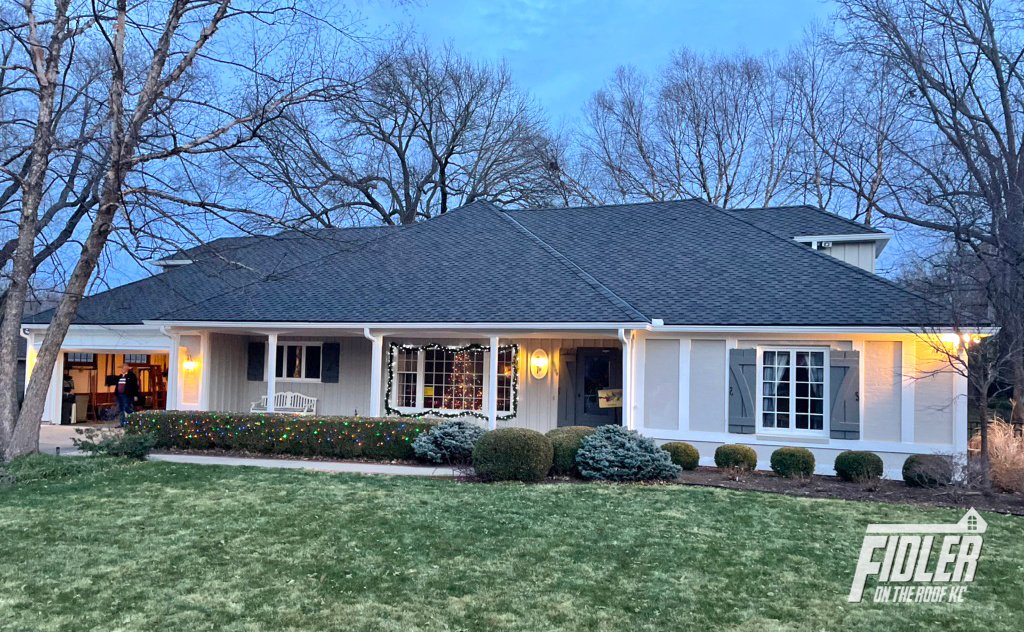


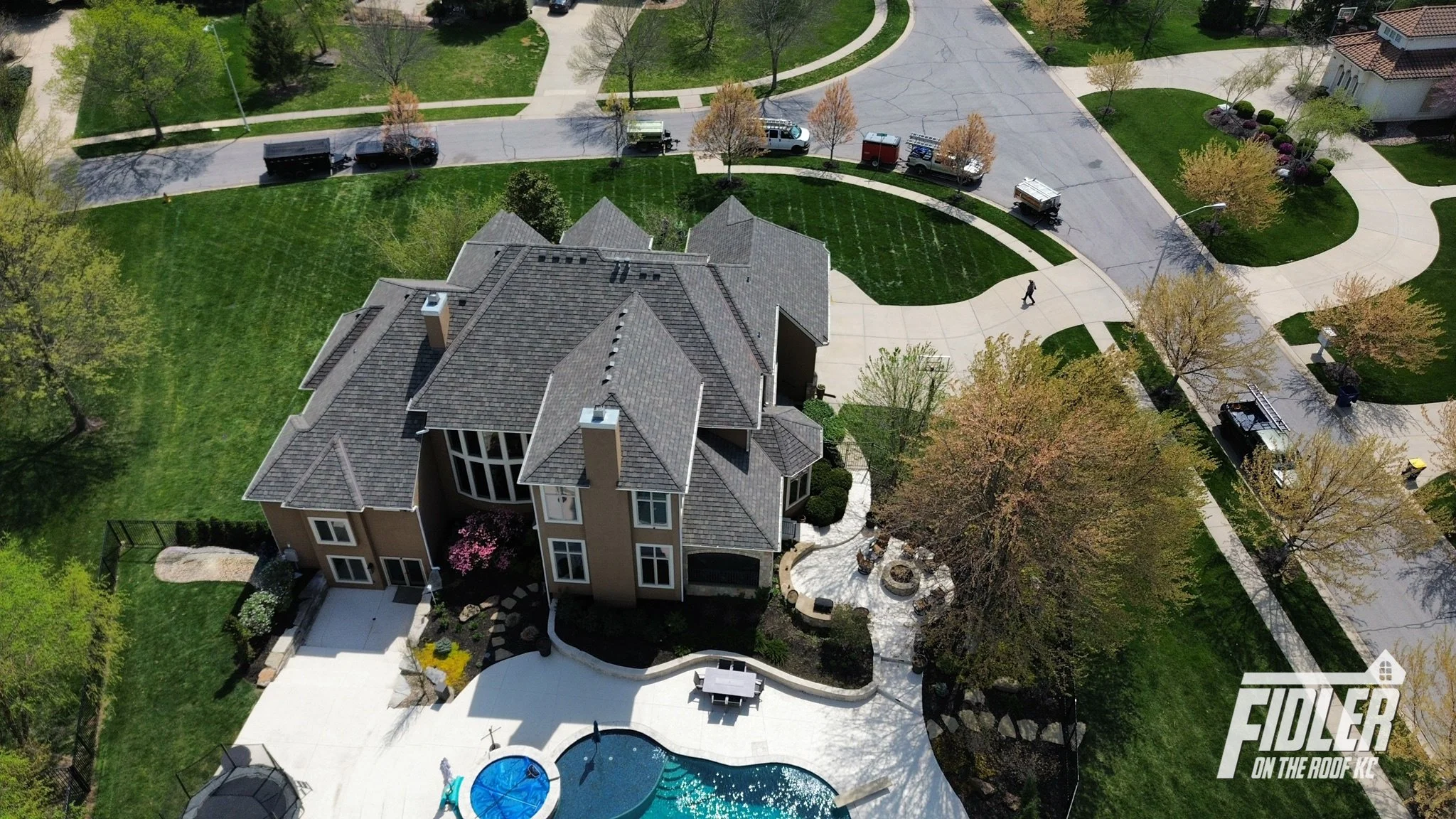
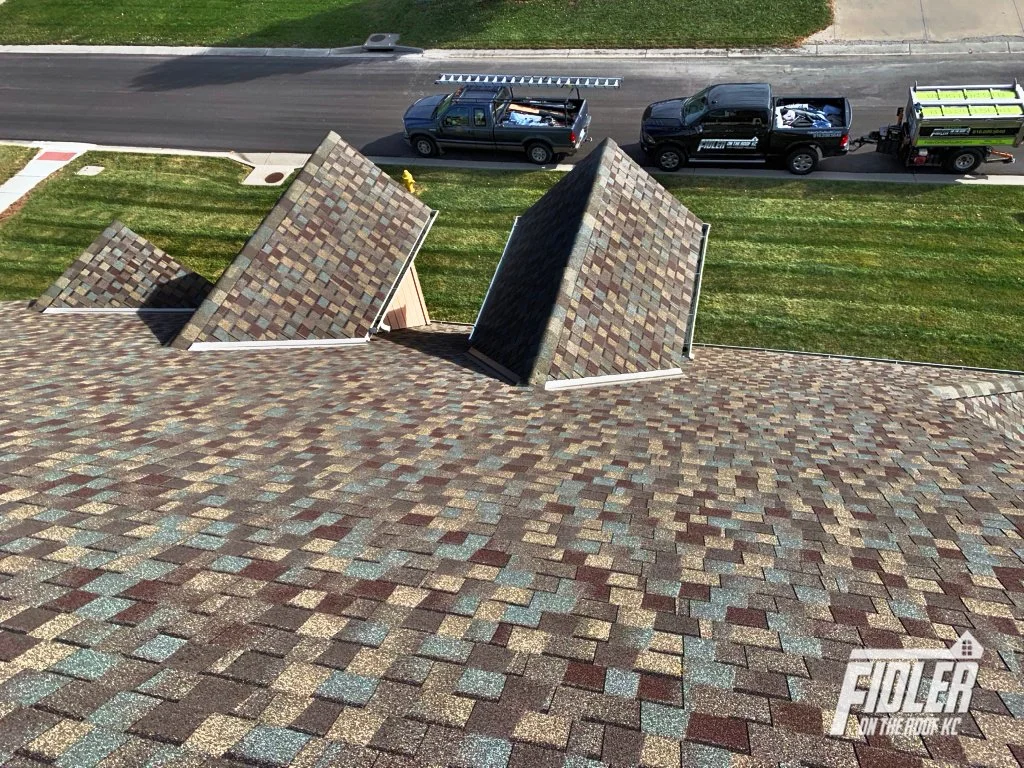
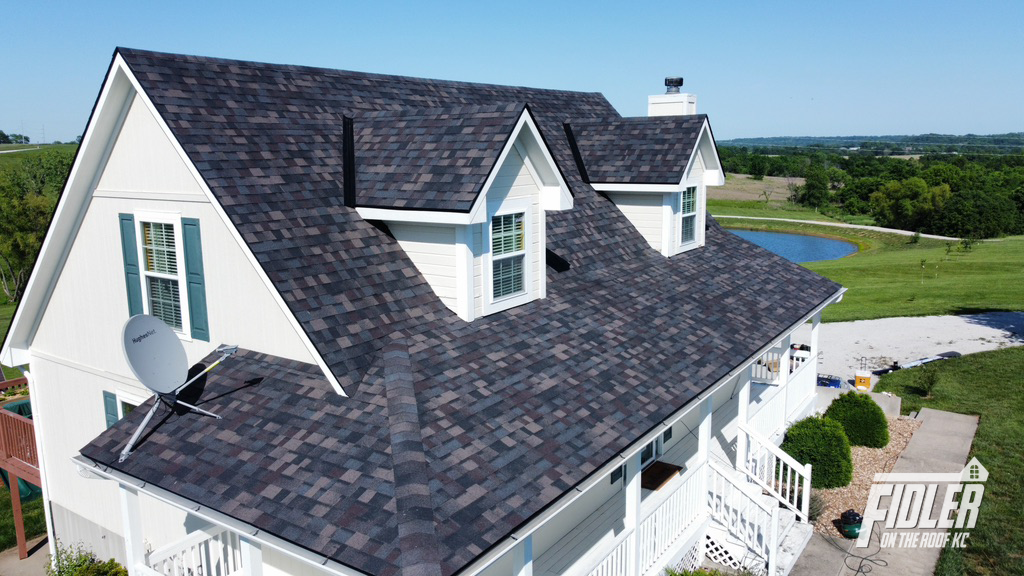
CLAY TILE ROOFING
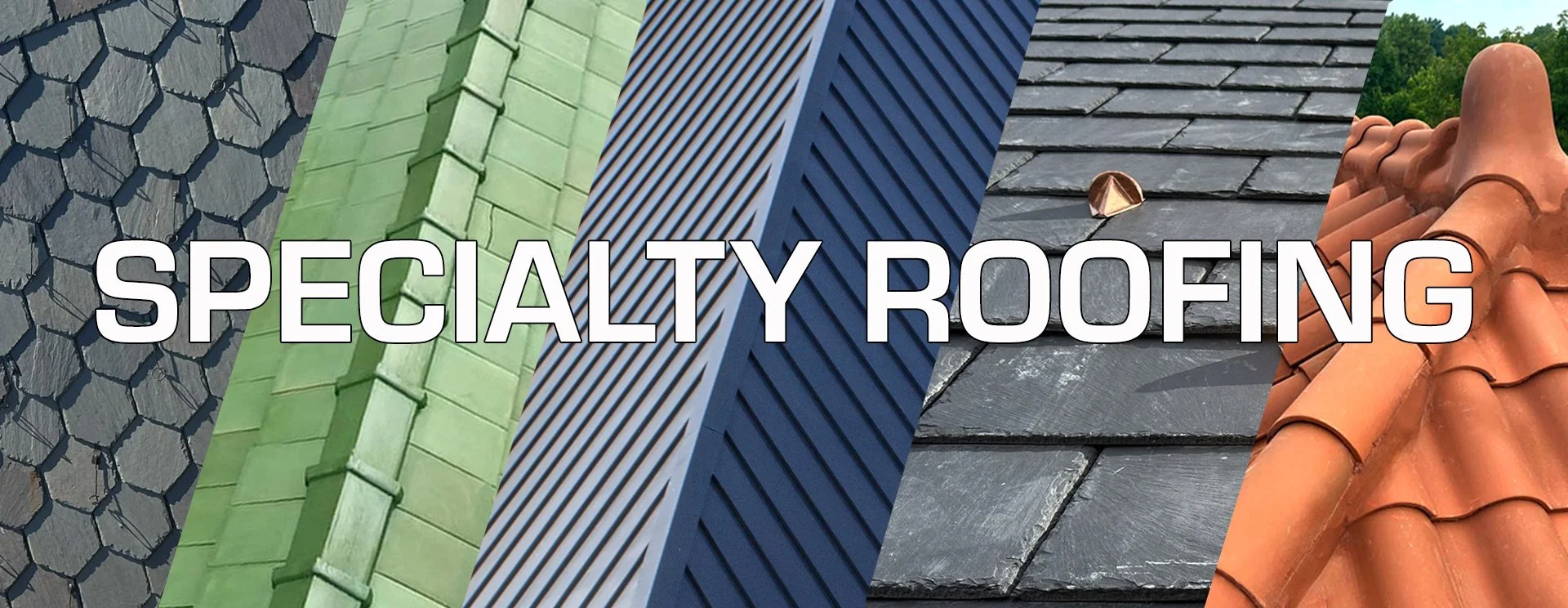
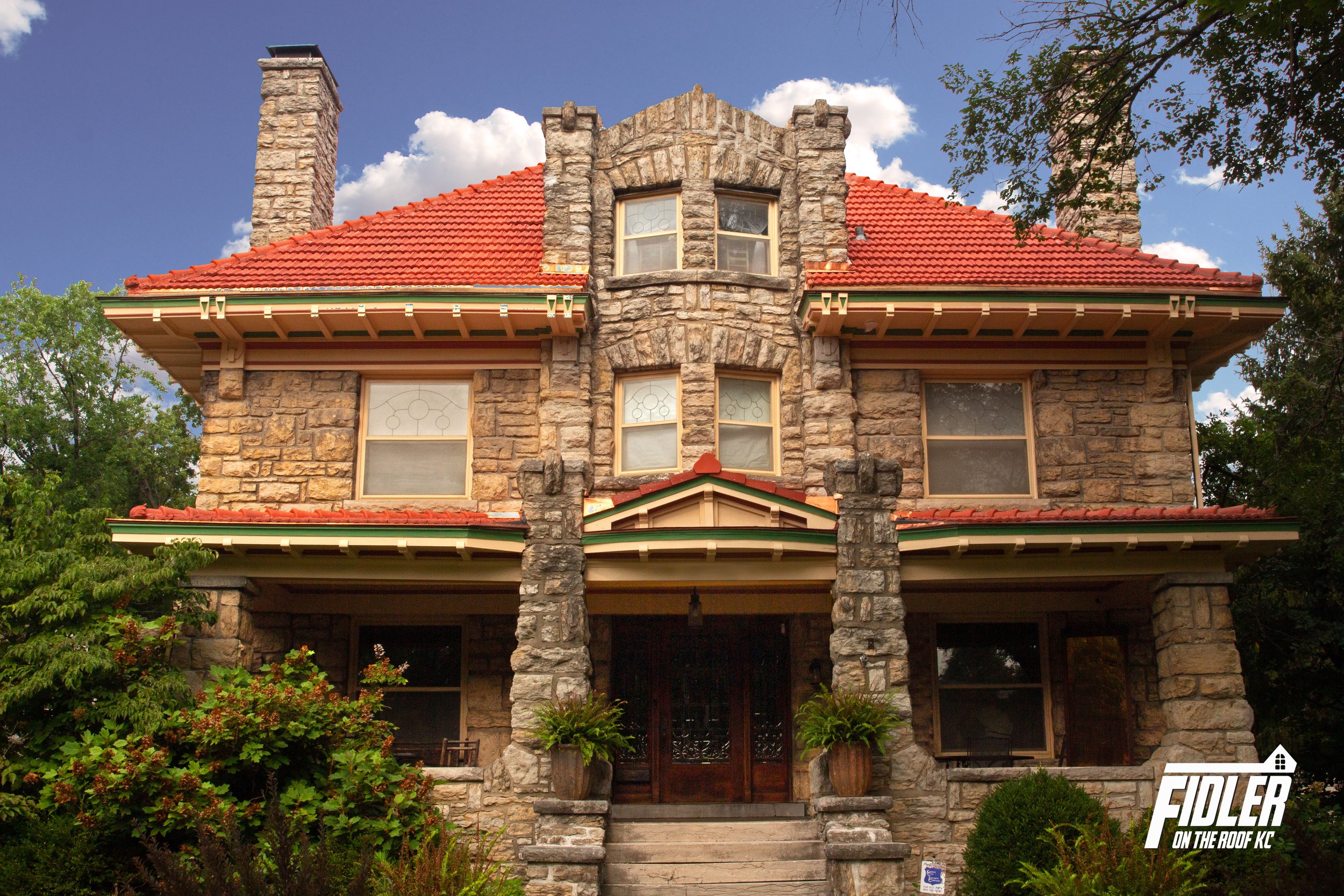
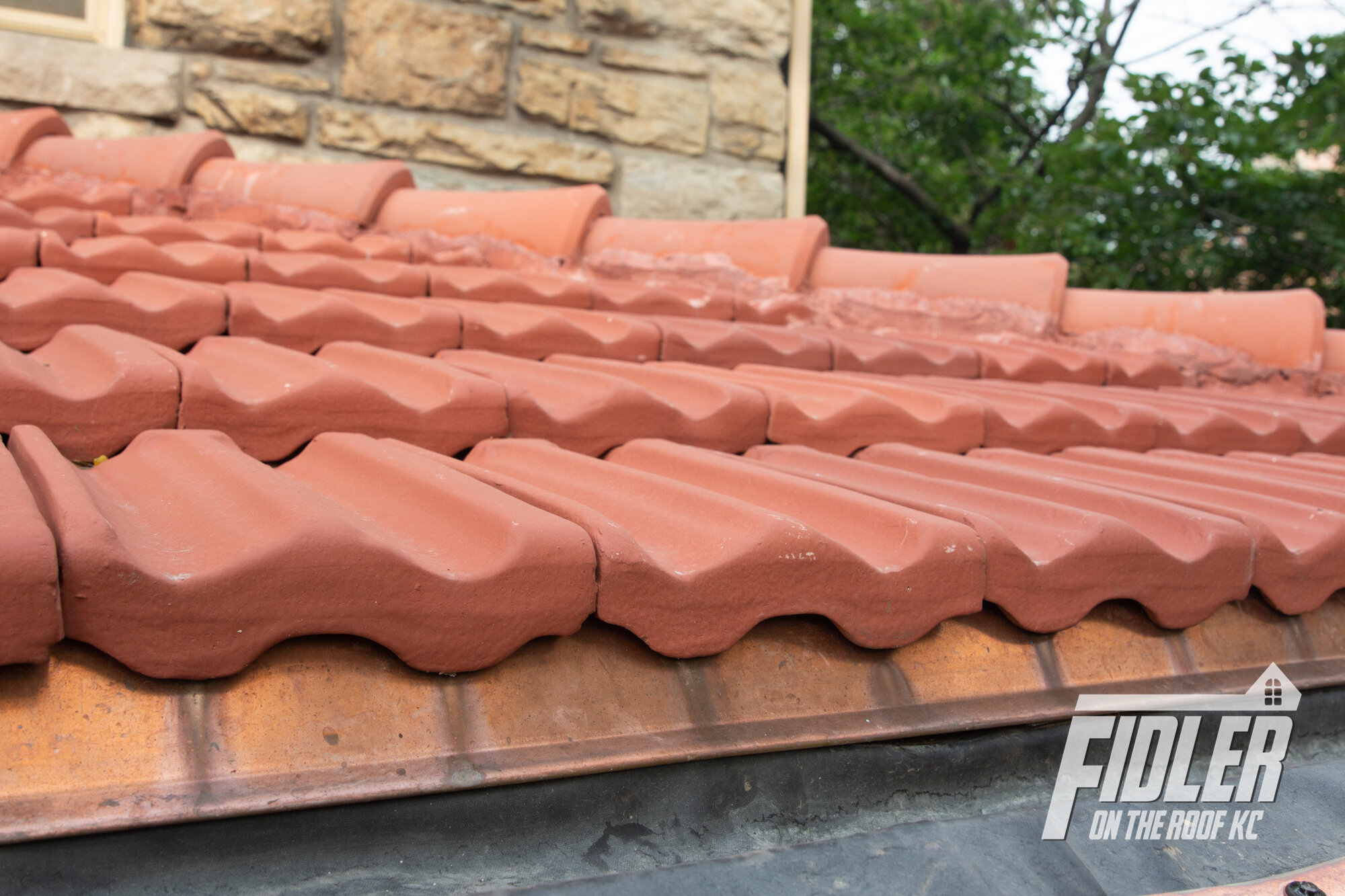
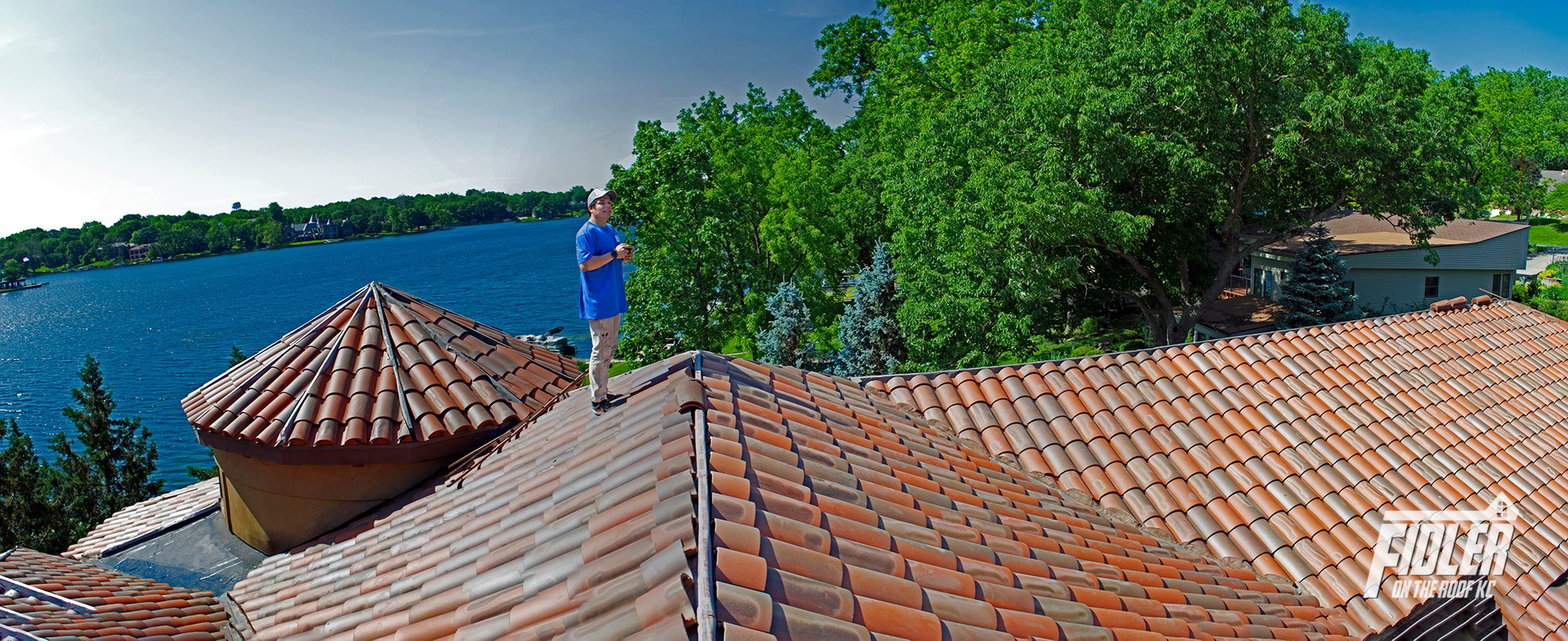
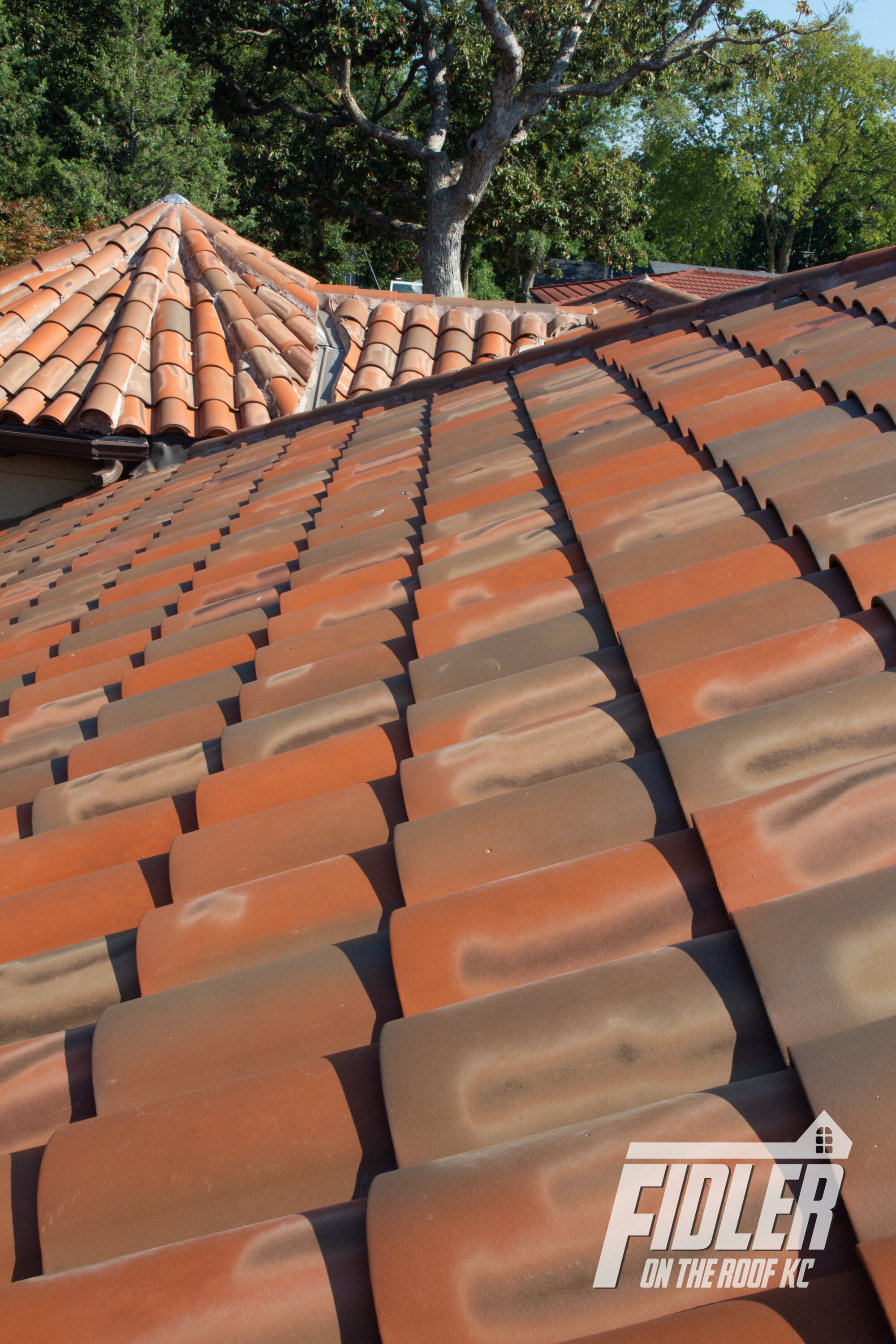
Clay tile roofing has been used around the globe for centuries and is still the default roofing material in much of the world. In the United States, it is usually selected for its aesthetic “curb appeal” properties or to match an existing architectural theme (for example, a Mediterranean style). Once made by hand, clay tiles are now manufactured with precision. These tiles create a distinctive roof profile and can be customized in numerous ways, with aesthetics ranging from contemporary to historical. We’re pleased to offer options from several quality manufacturers, including Ludowici. Styles include barrel, flat, French and Spanish.
Benefits of clay tile roofing
Longevity: Clay tiles often outlast the surfaces they’re attached to and can last a century (or more) with proper maintenance.
Clay tiles are energy efficient and have insulating properties, regulating cold and heat.
Clay tiles are enduring, standing up against sun, wind, rain, hail and seasonal temperature changes. They are also fire resistant.
Clay tiles can maintain and sustain the appearance of historical properties, achieving a visual effect similar to the original tiles.
Clay tiles are eco-friendly, being made of natural materials. They can be recycled at their end of their lifespan.
Requirements for clay tile roofing
A home’s roofing structure must be built with the capacity to support clay tile. Some homes were not built with the capacity for clay, concrete or clay surfaces. An engineer can evaluate your roof to determine its strength. If your roof cannot sustain heavy materials, other options are available. For example, stone-coated steel is a lightweight option that provides an appearance similar to clay or slate tile.
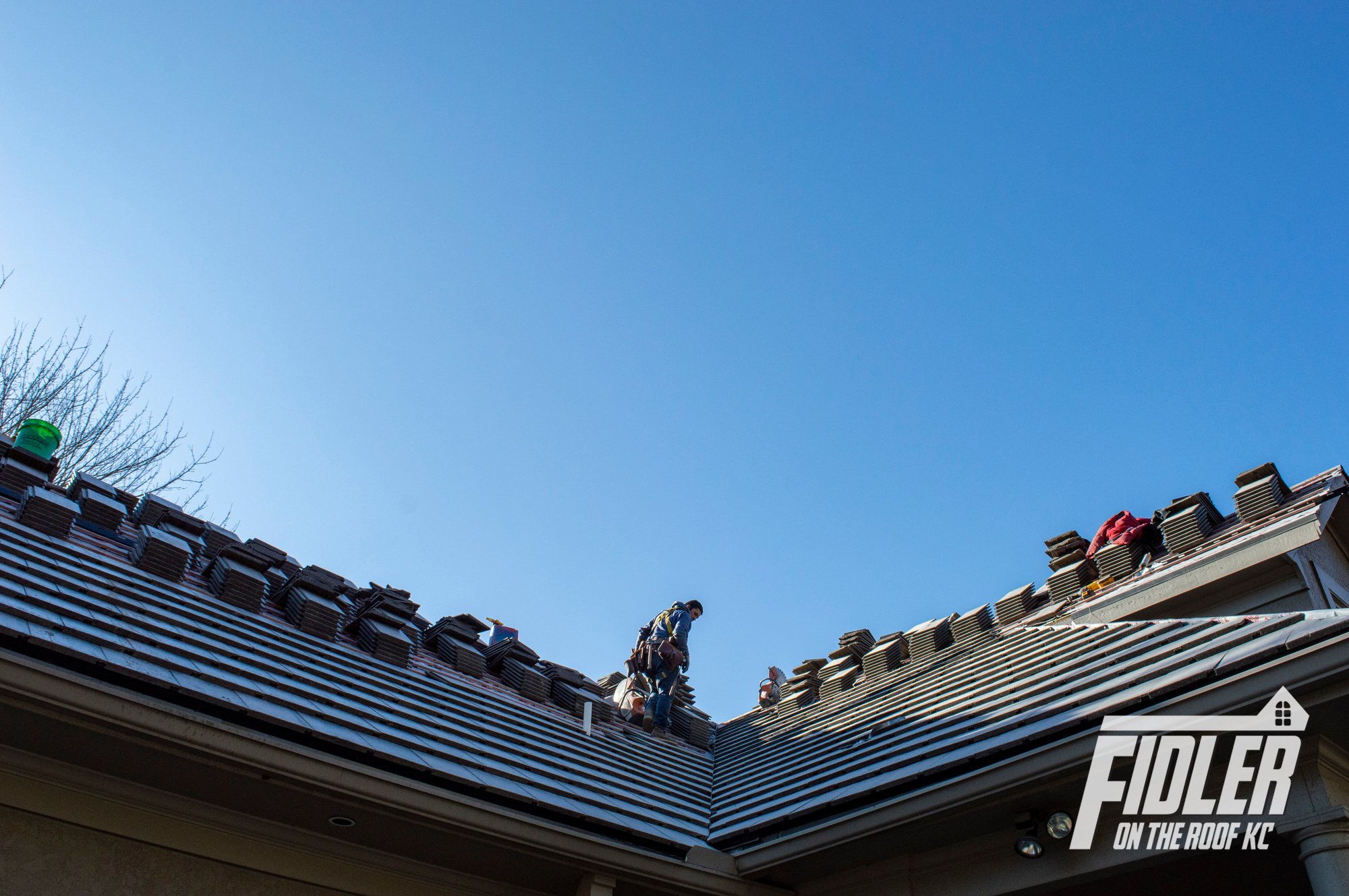
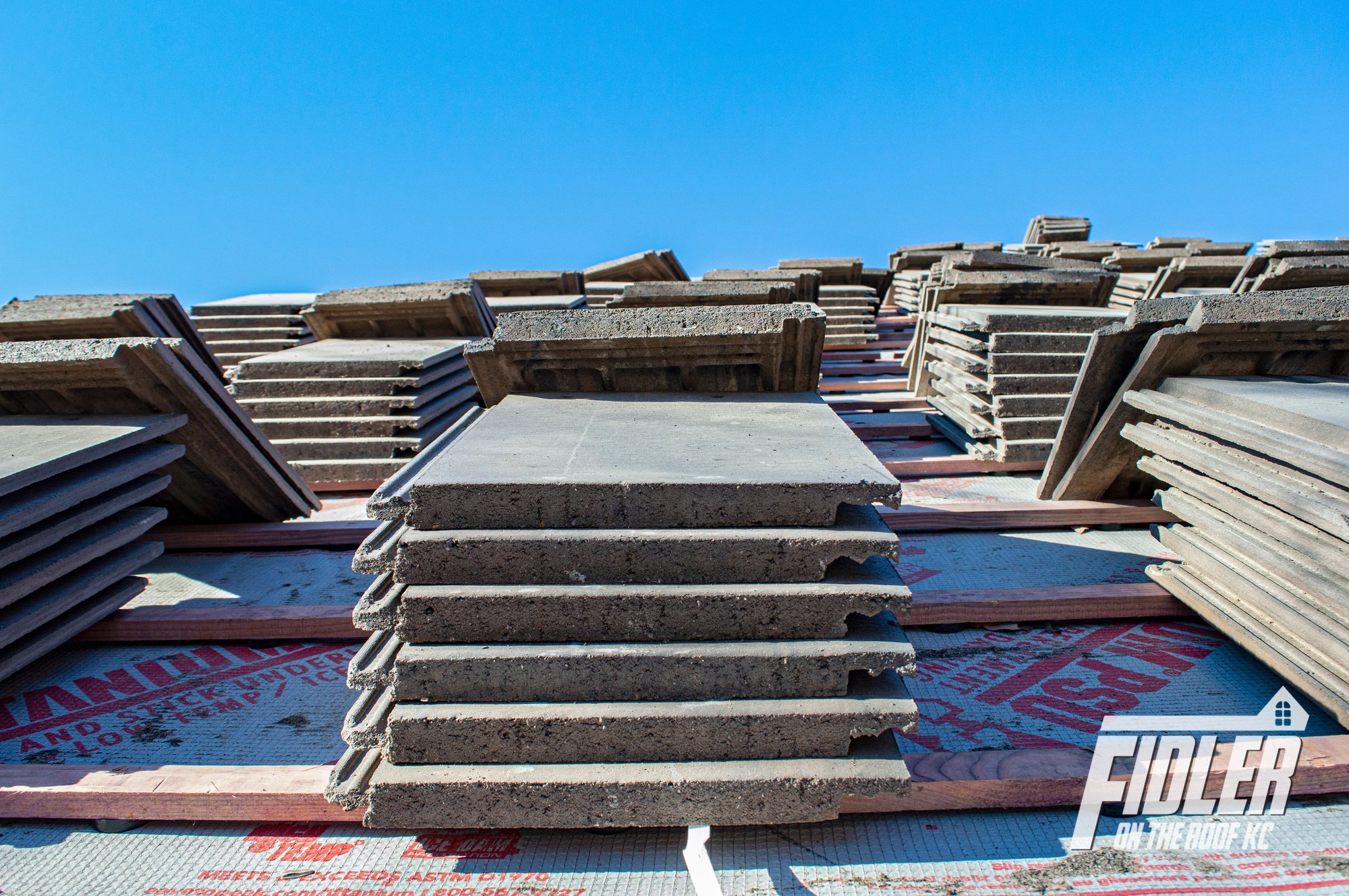
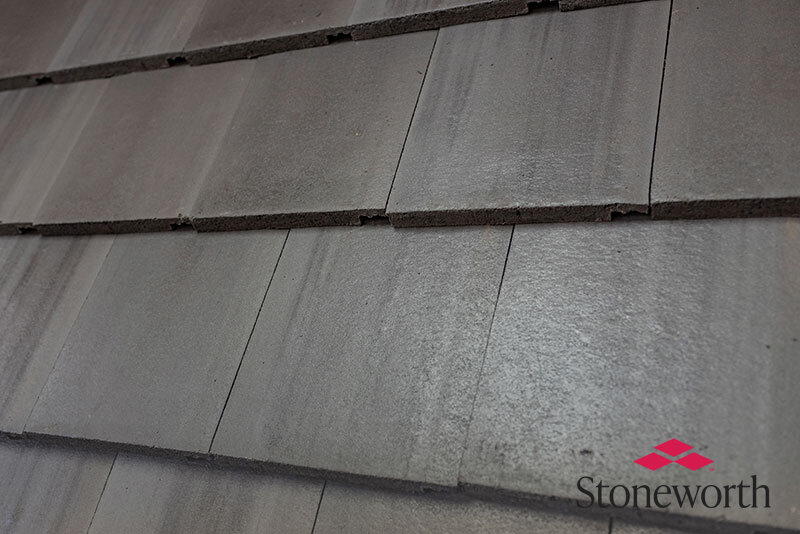
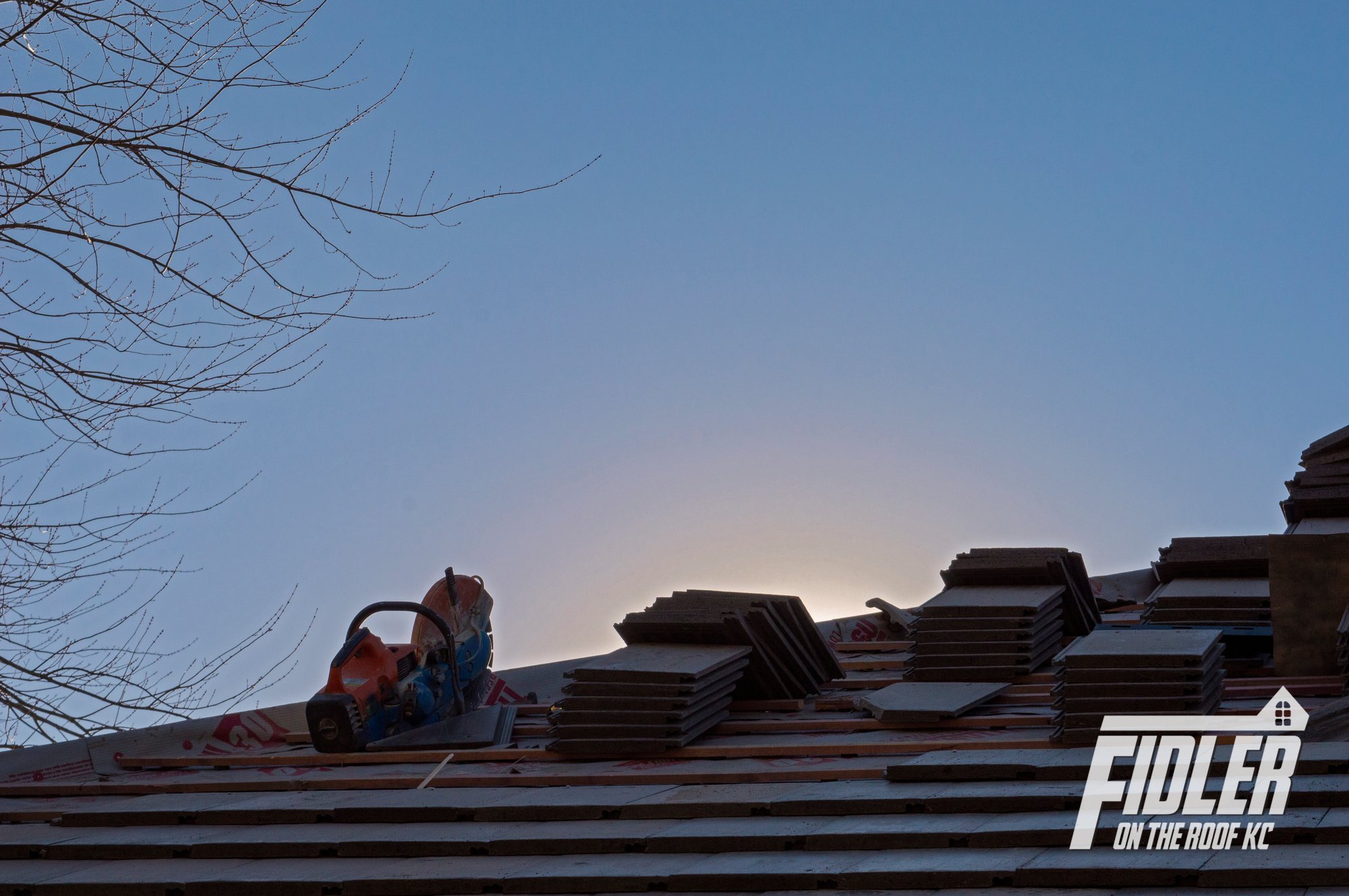
CONCRETE TILE ROOFING
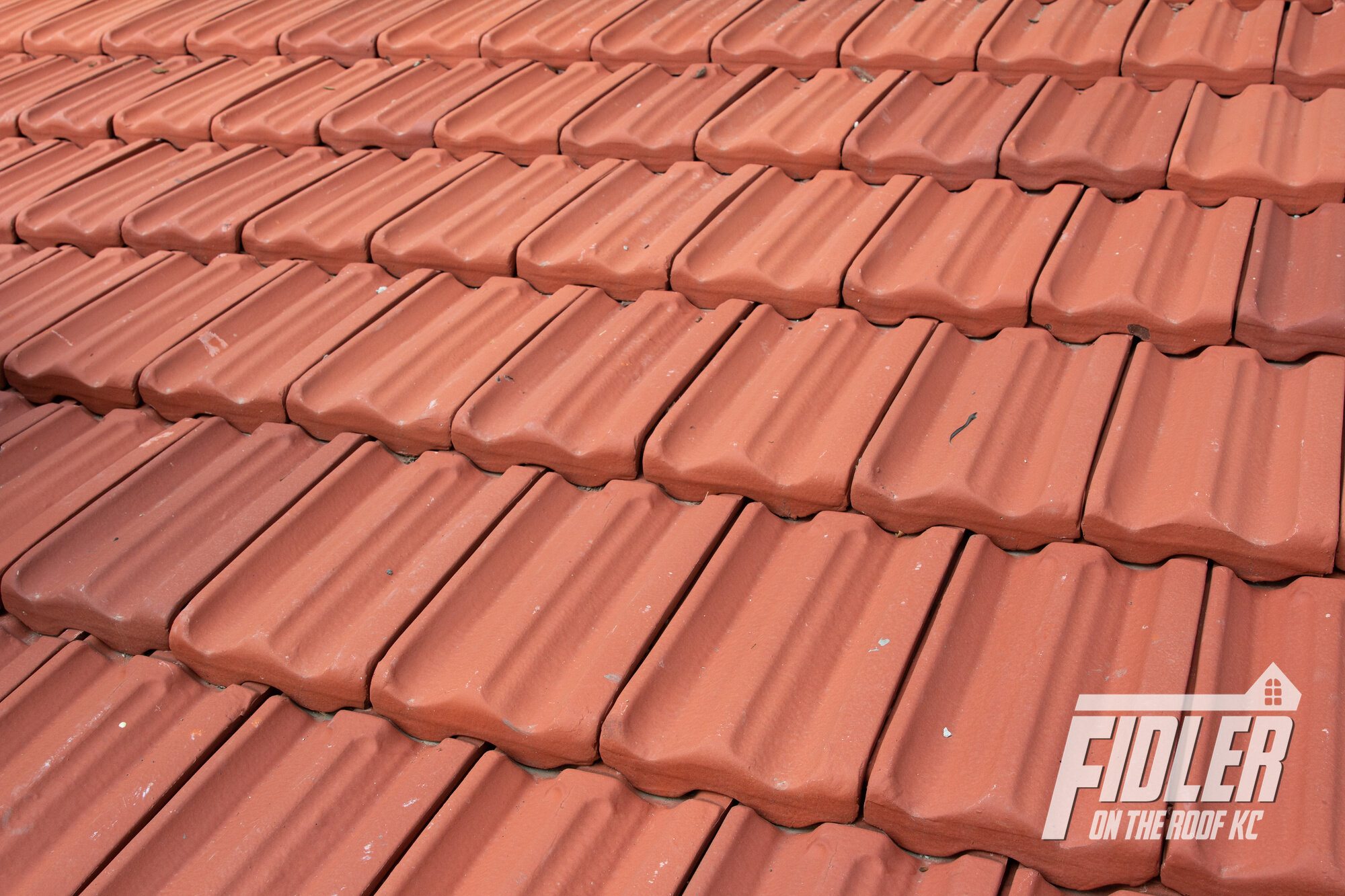
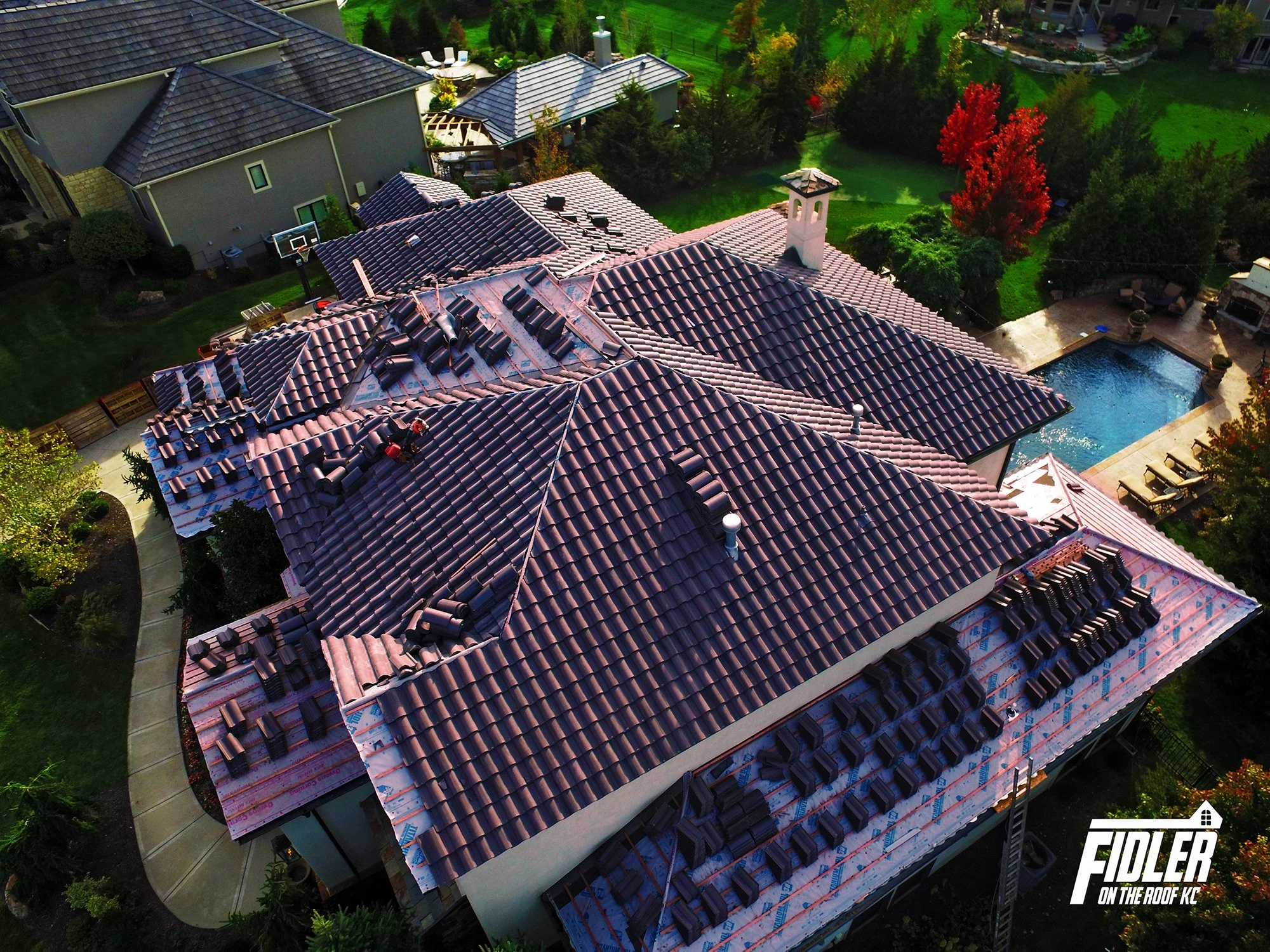
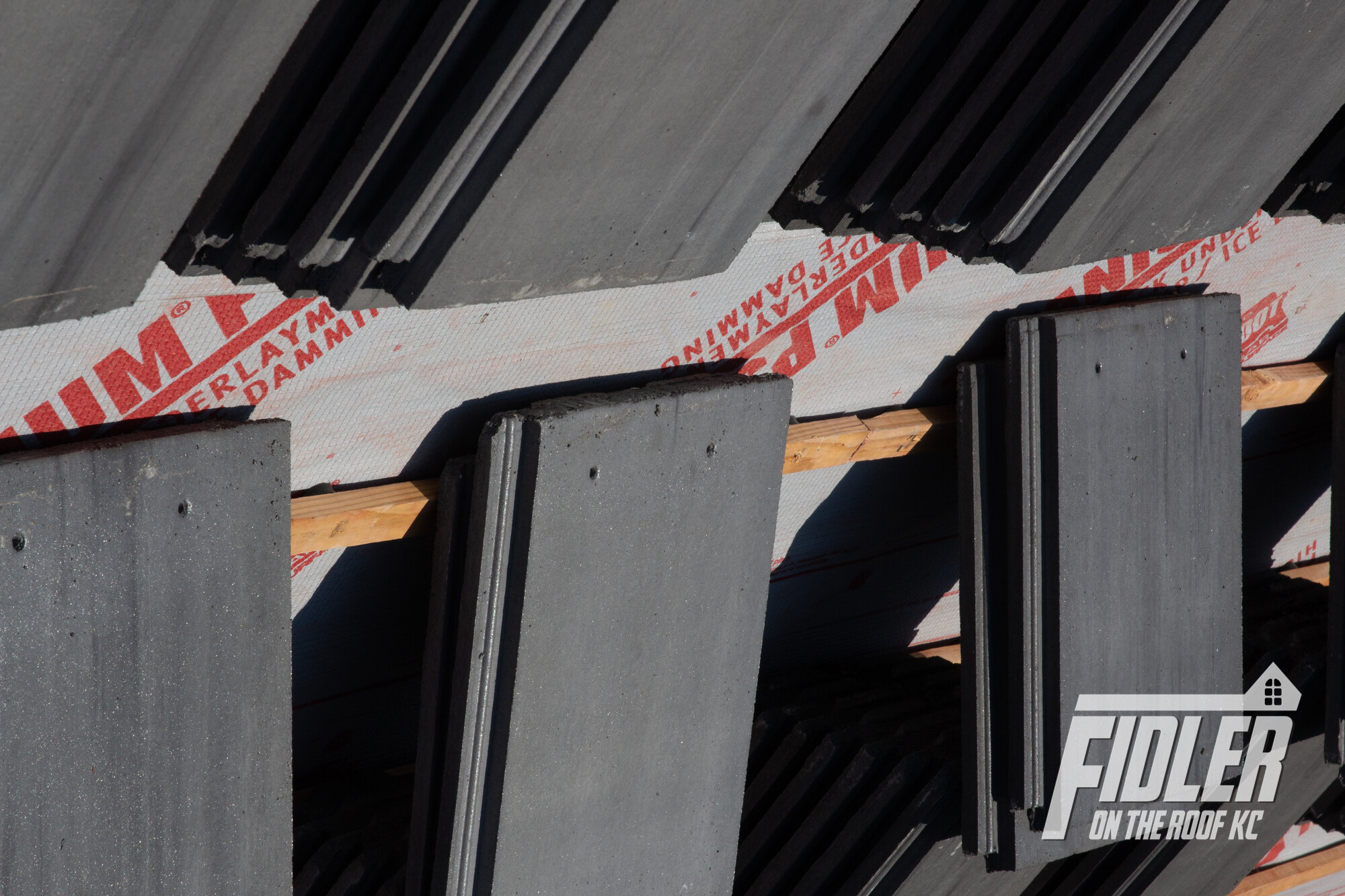
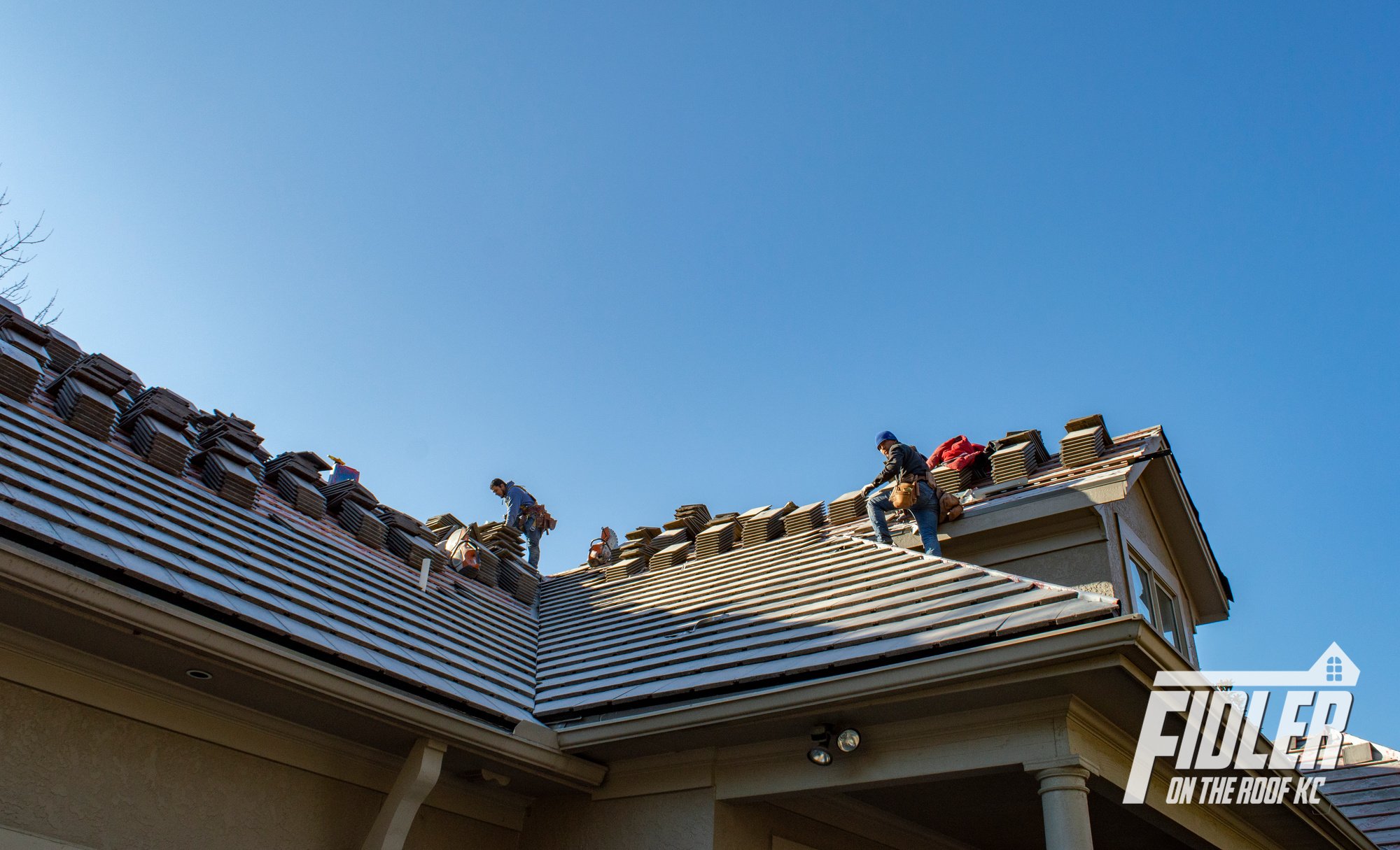
Concrete tiles are made from natural materials engineered to create a wide variety of colors and textures. They’re durable, energy efficient and striking in appearance. You may not be familiar with these tiles, but you’ve certainly seen them. They’re often mistaken for slate or stone. Sleek and stylish, concrete roof tiles come in diverse varieties ranging from traditional and vintage to modern. Because they are precision-manufactured, concrete roof tiles have essentially unlimited design options. Colors also vary widely. In addition to its aesthetic appeal, concrete tile is among the most durable of roofing surfaces. The raw materials used to create these tiles also make them an eco-friendly alternative to oil-based roofing products. They’re made of sand, cement, water and iron oxide (which influences color). These tiles’ durability also means they’ll last for decades and won’t contribute to landfill waste anytime soon.
Benefits of concrete tile roofing
Concrete tiles are built to withstand the elements and can last 50-100 years. They are immune to pests, resistant to hail and can withstand winds of 125 mph. They are also fire resistant.
Because concrete roofing tiles are manufactured, there are virtually unlimited style options. Styles include flat, interlocking, barrel, Spanish, French and mission. The result is dynamic curb appeal.
Concrete tiles are an eco-friendly option made from organic materials: sand, water, cement and iron oxide (for color). In addition, they can be recycled at the end of their life span.
SLATE TILE ROOFING
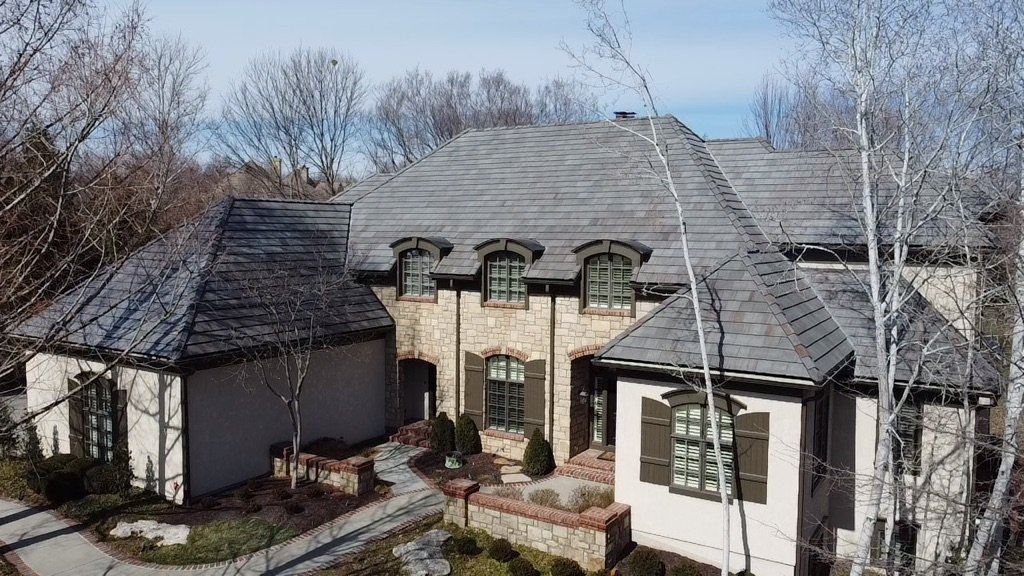
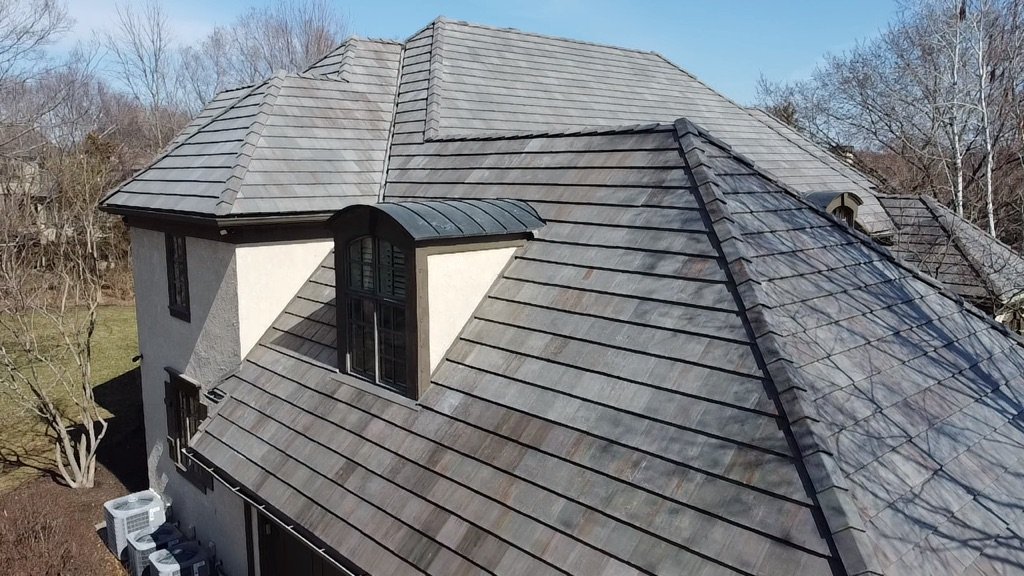
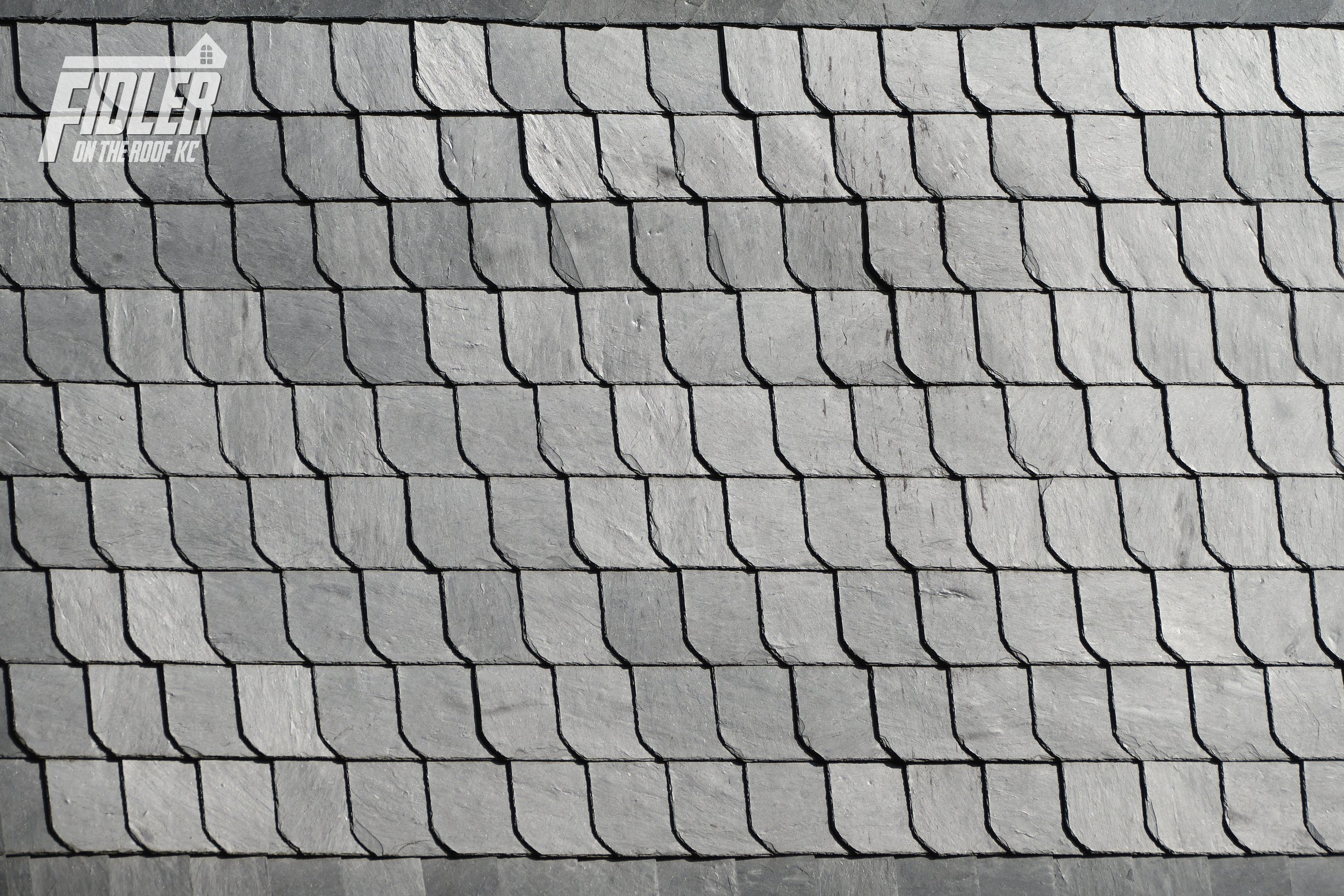
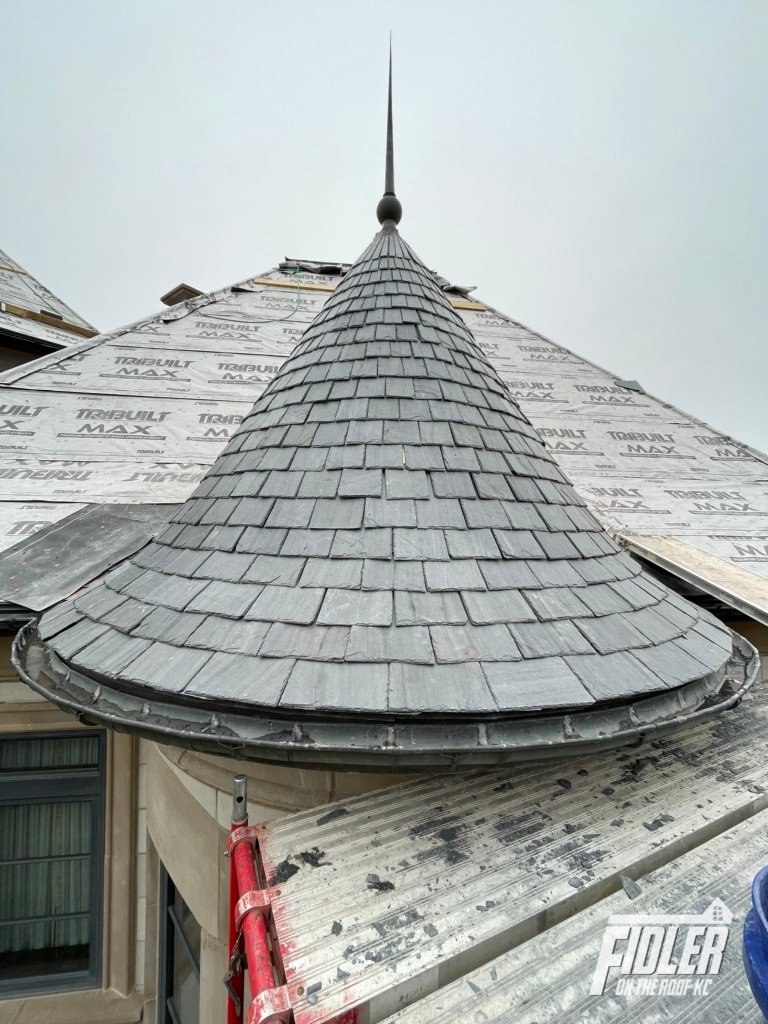
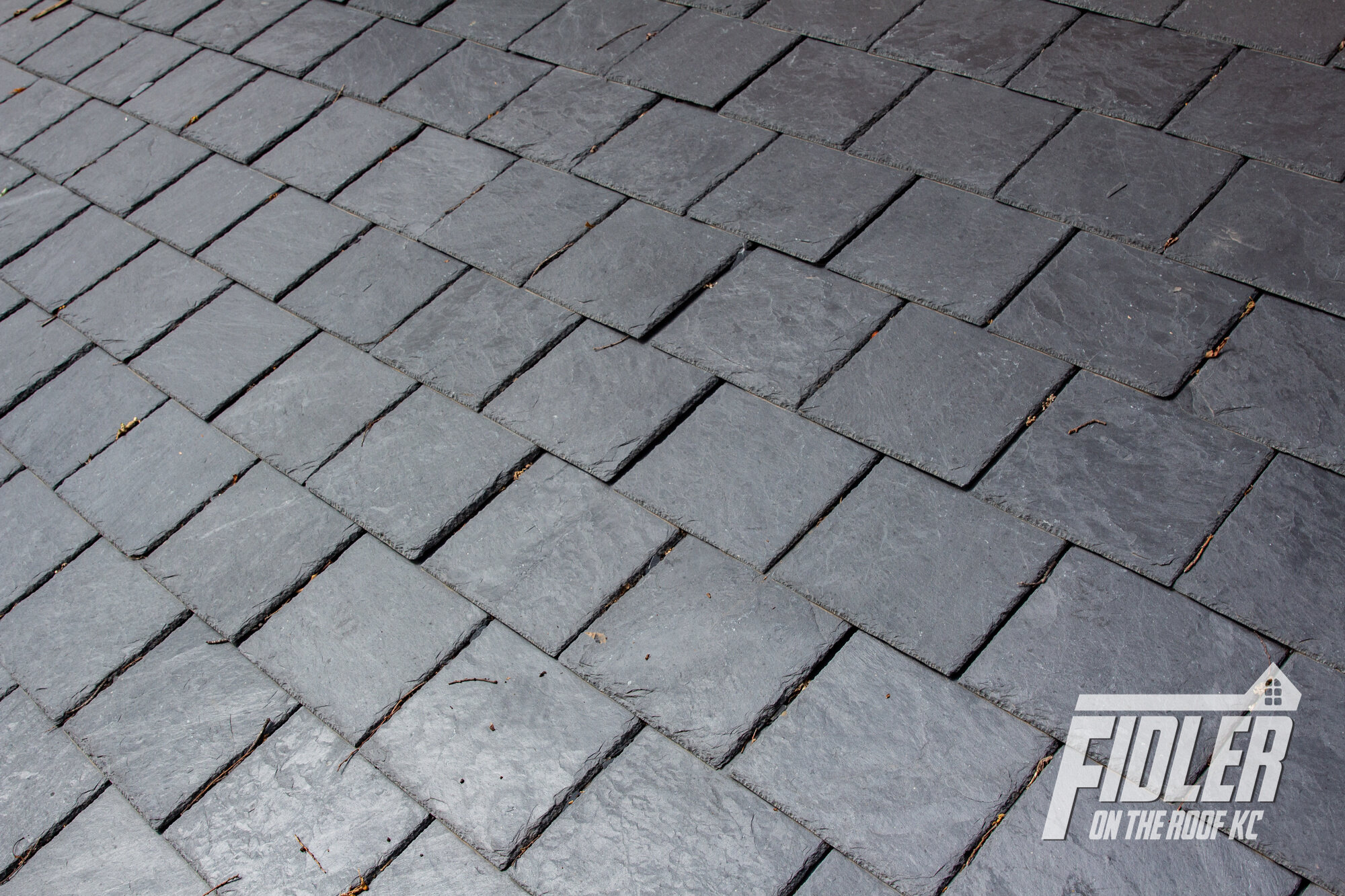
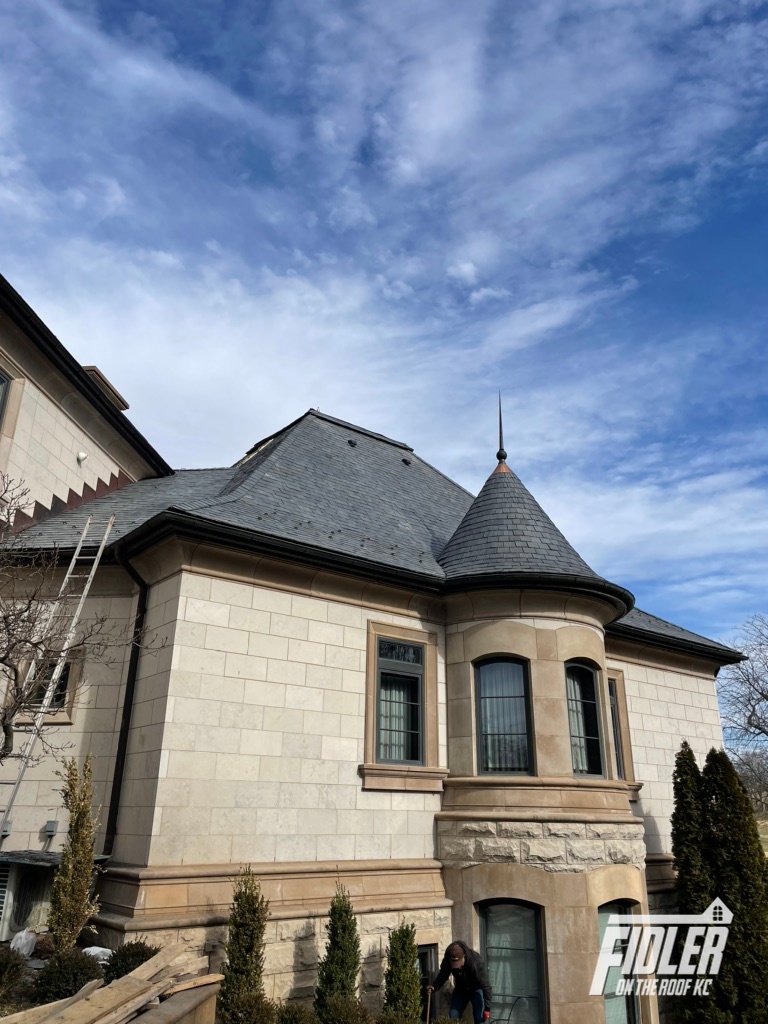
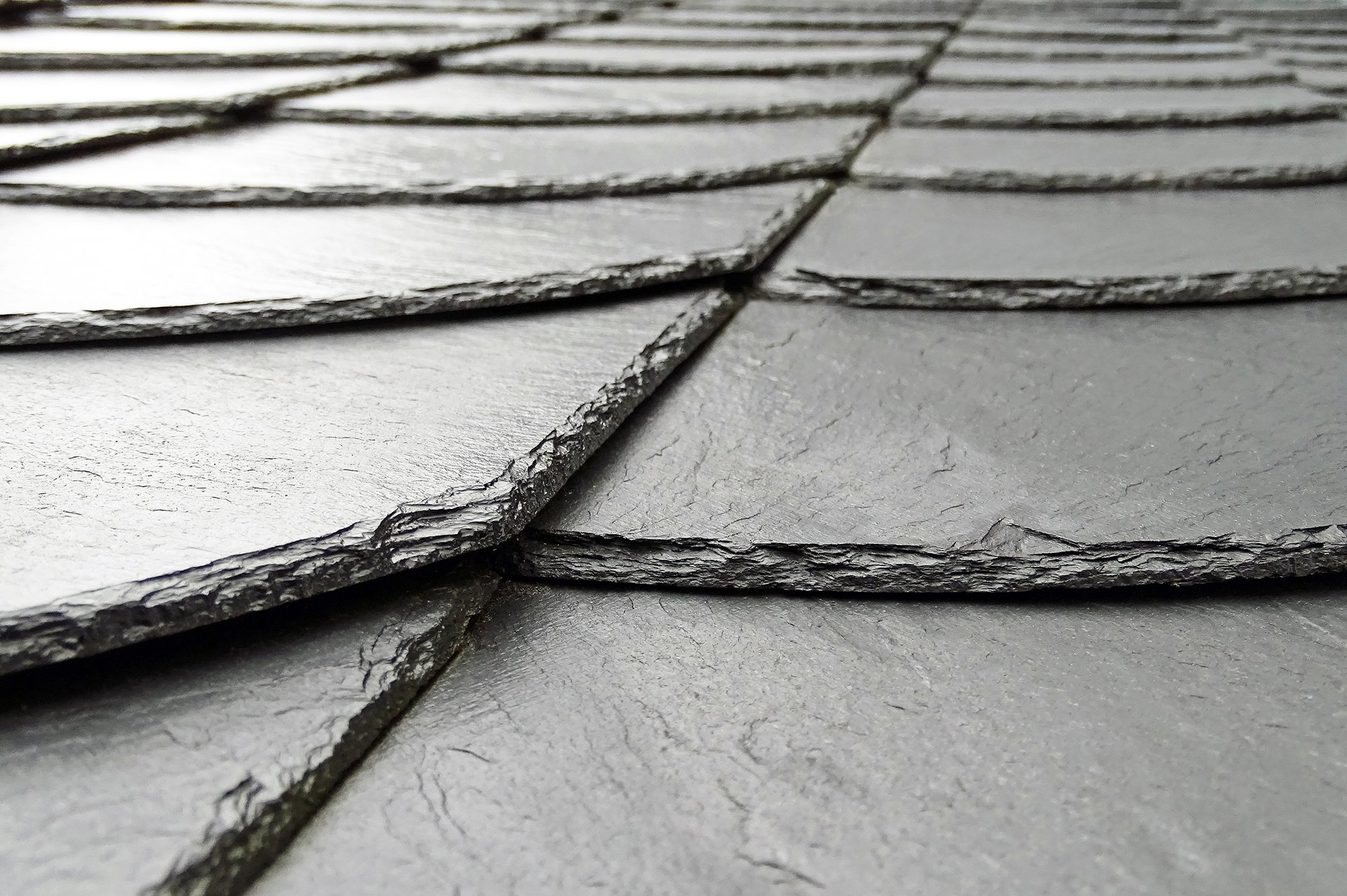
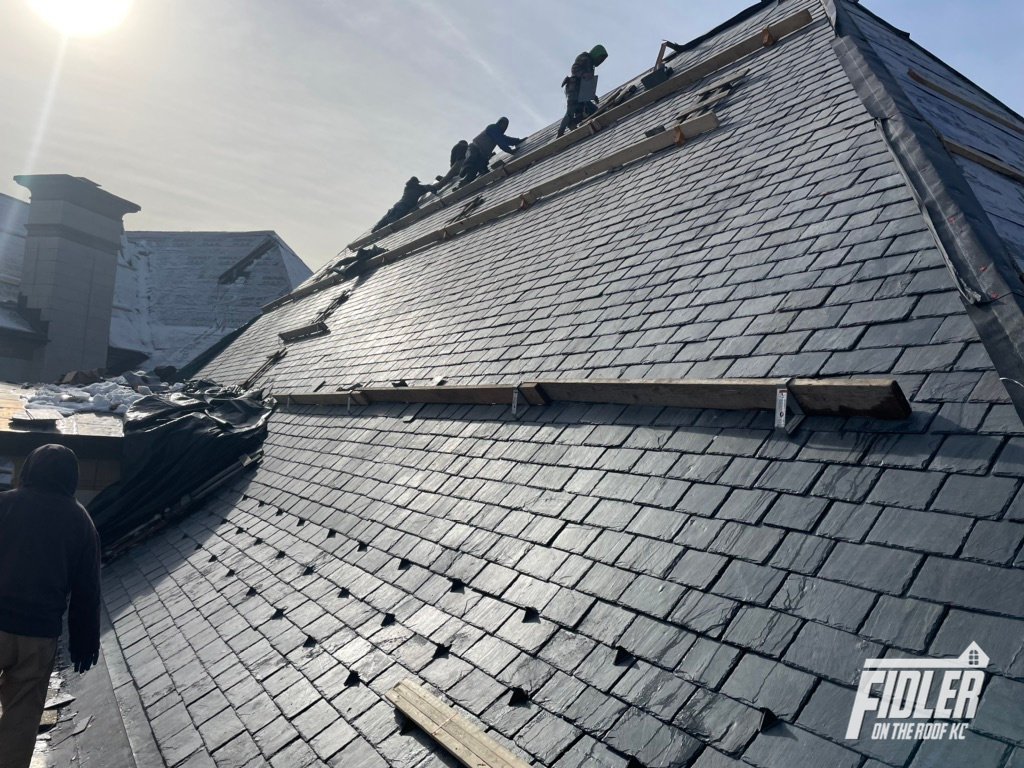
Slate, another natural surface, provide homes with an organic, reflective beauty. This durable material comes in a variety of colors, thicknesses and textures. We use quality slate products from manufacturers including Ludowici. You can’t get any more natural than slate. It’s quarried – not manufactured – and its composition causes it to readily split into thin slabs. Slate is the result of pressure and heat that transformed existing rock. It naturally occurs in varying colors due to variances in its chemical composition. Colors include black, grey, green, red and even purple.
Benefits of slate tile roofing
Slate tile roofing is among the sturdiest, lasting a century or more with proper maintenance. It stands up to weather, mold and pests. It’s also fire resistant.
Slate tile comes in a wide variety of colors and styles. Often, these are mixed on the same roof to create unique patterns.
Slate tile is an eco-friendly choice. It’s quarried, not manufactured.
What if your home can’t support the structural requirements of slate tile?
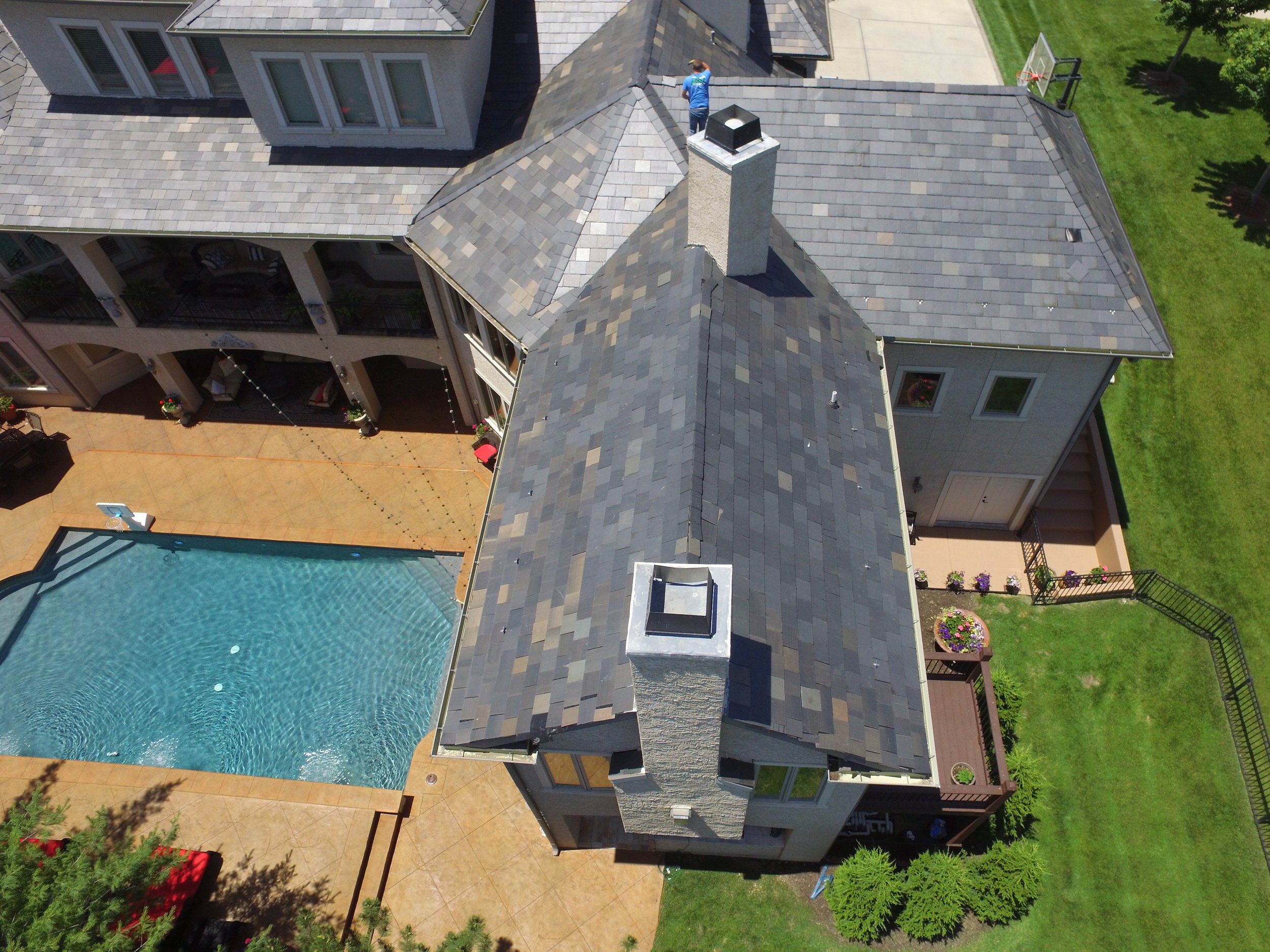
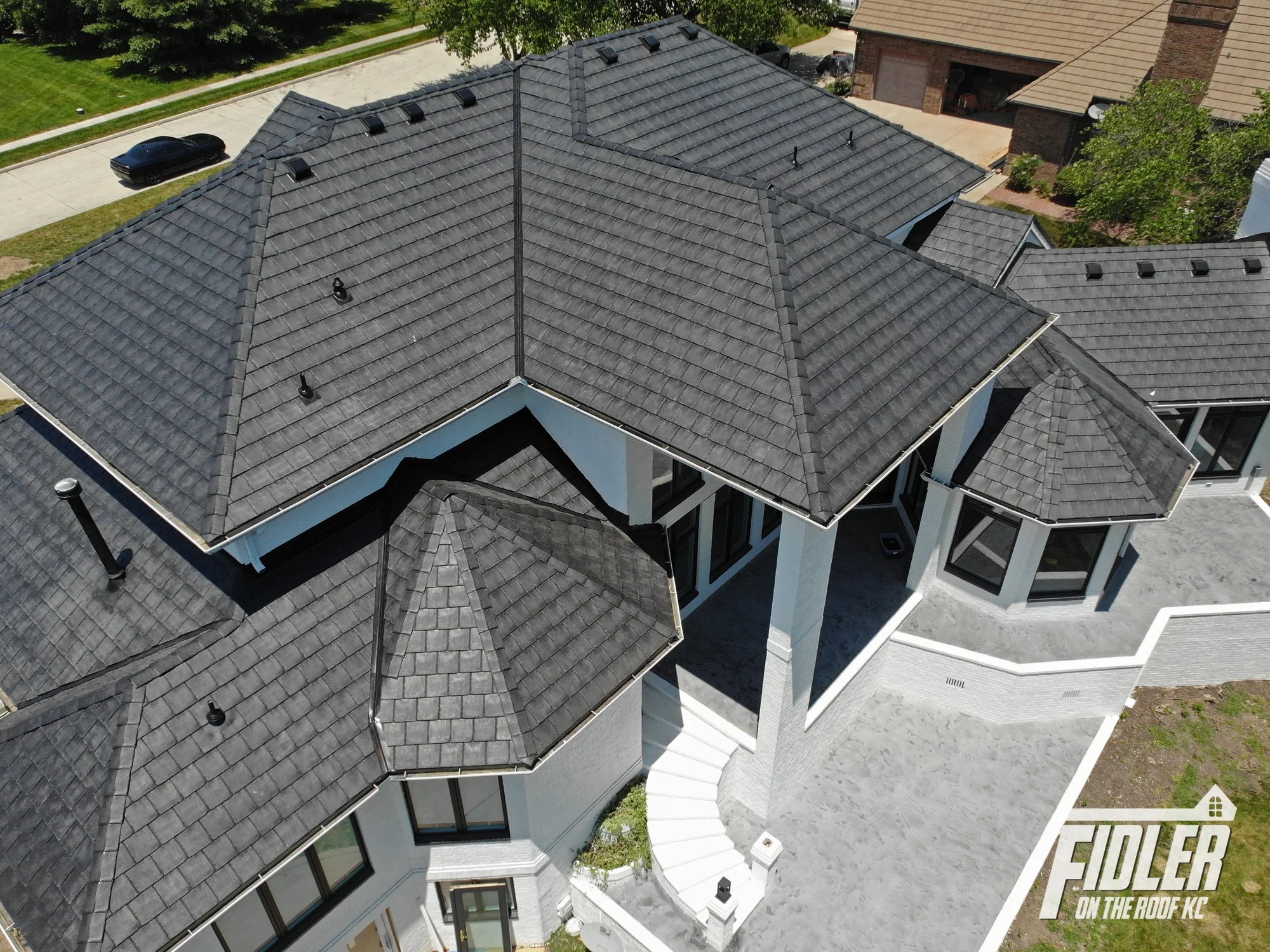
Slate roofing tile offers a classic look and organic texture that reflects Old World style. Unfortunately, because of its weight, slate can only be installed on homes that are structurally engineered to support heavier roofs. But there's an alternative: Synthetic slate tile replicates the look and feel of quarried stone, but without the weight. That means it's an option for any home. It's manufactured from durable composite materials, including from Lenexa-based DaVinci Roofscapes. Fidler has been designated as a DaVinci Master Installer.
Advantages of synthetic slate tile
Because it is lighter than quarried slate, it has no weight restrictions and is an option for nearly any home.
It’s durable and impact resistant.
Synthetic slate resists weathering and maintains its appearance.
It’s fire-resistant with a Class A rating.
It can be produced in numerous colors and textures.
It’s a more budget-friendly option than quarried slate.
Standing-Seam Roofing
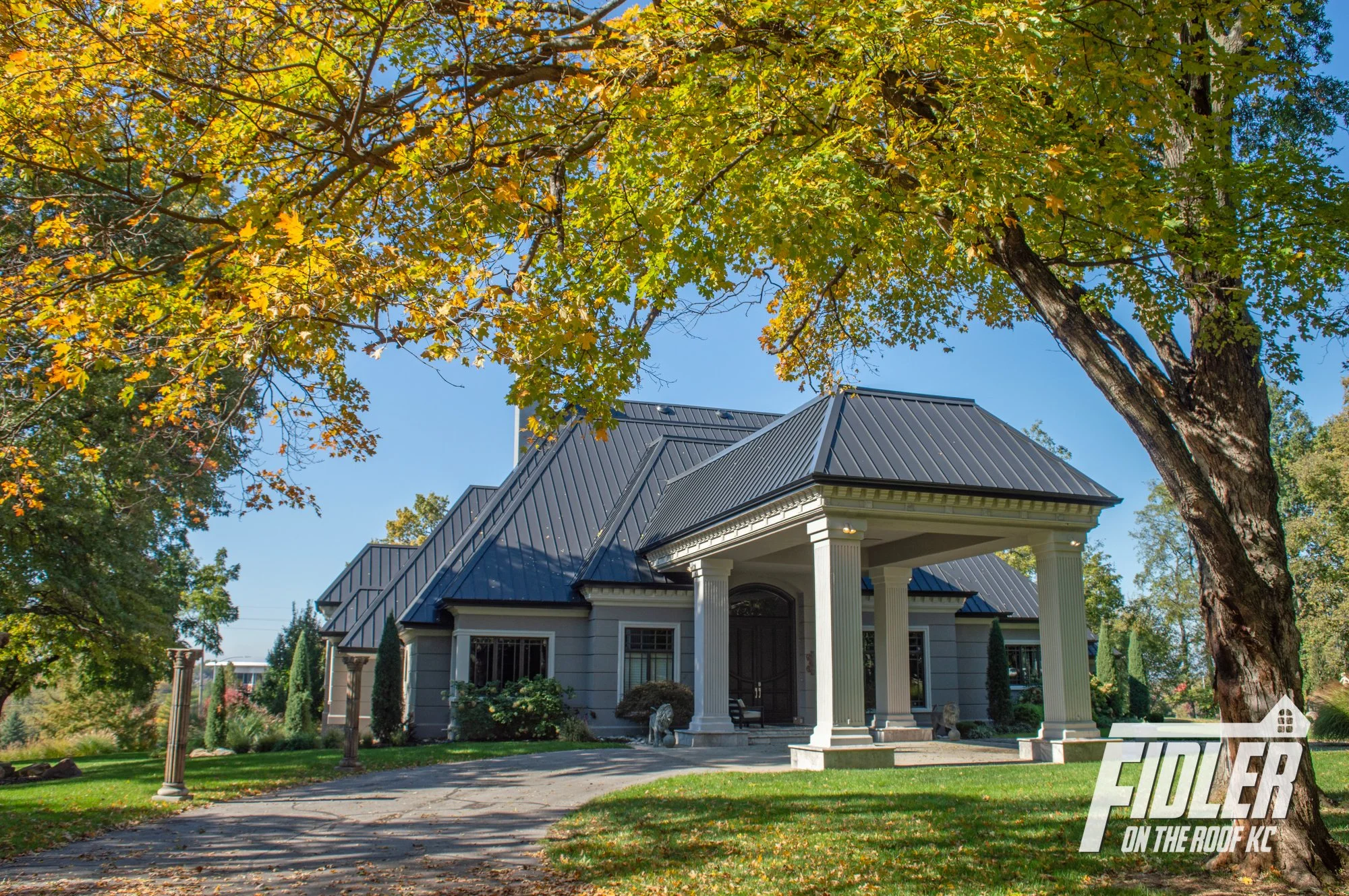
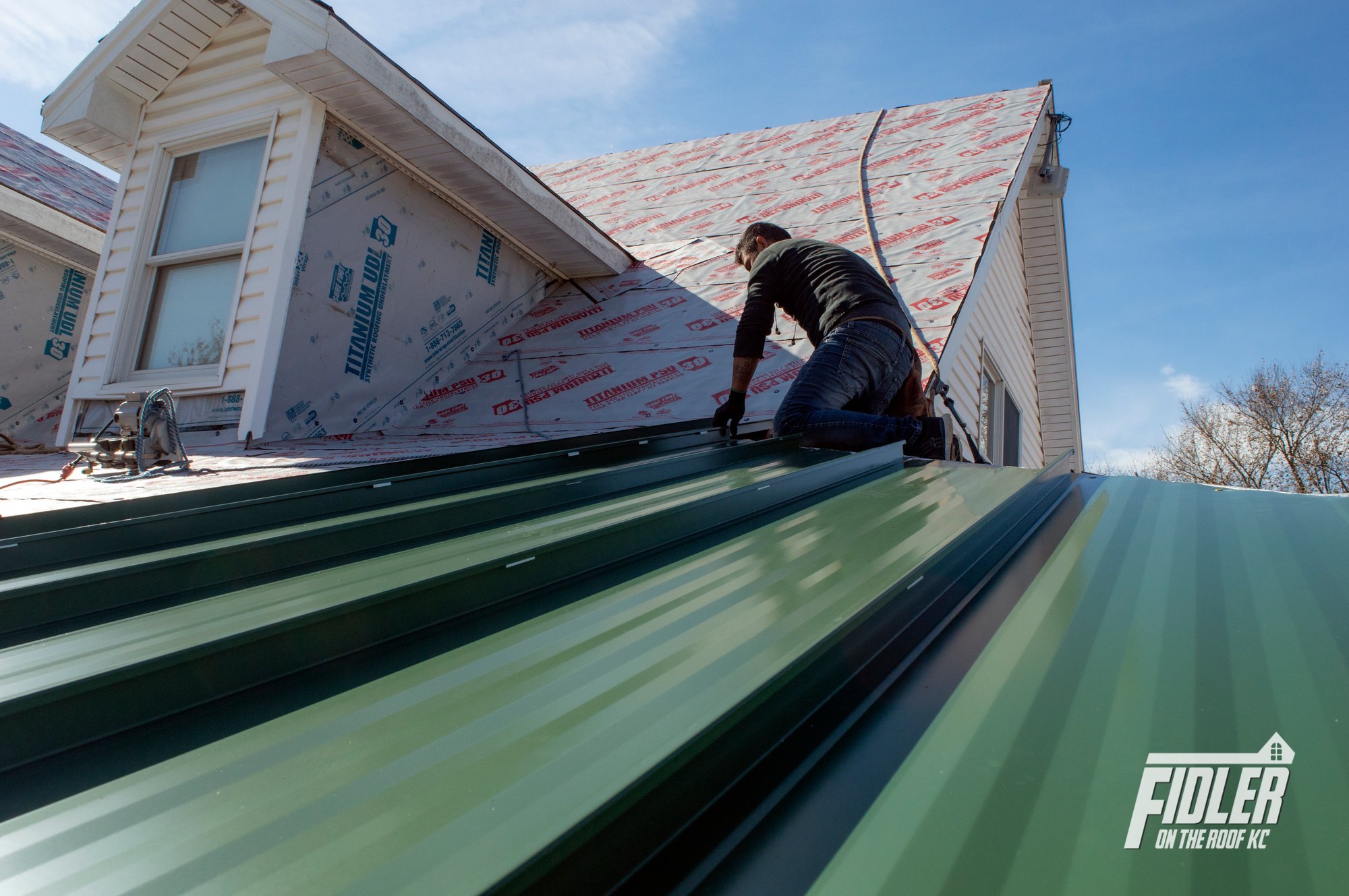
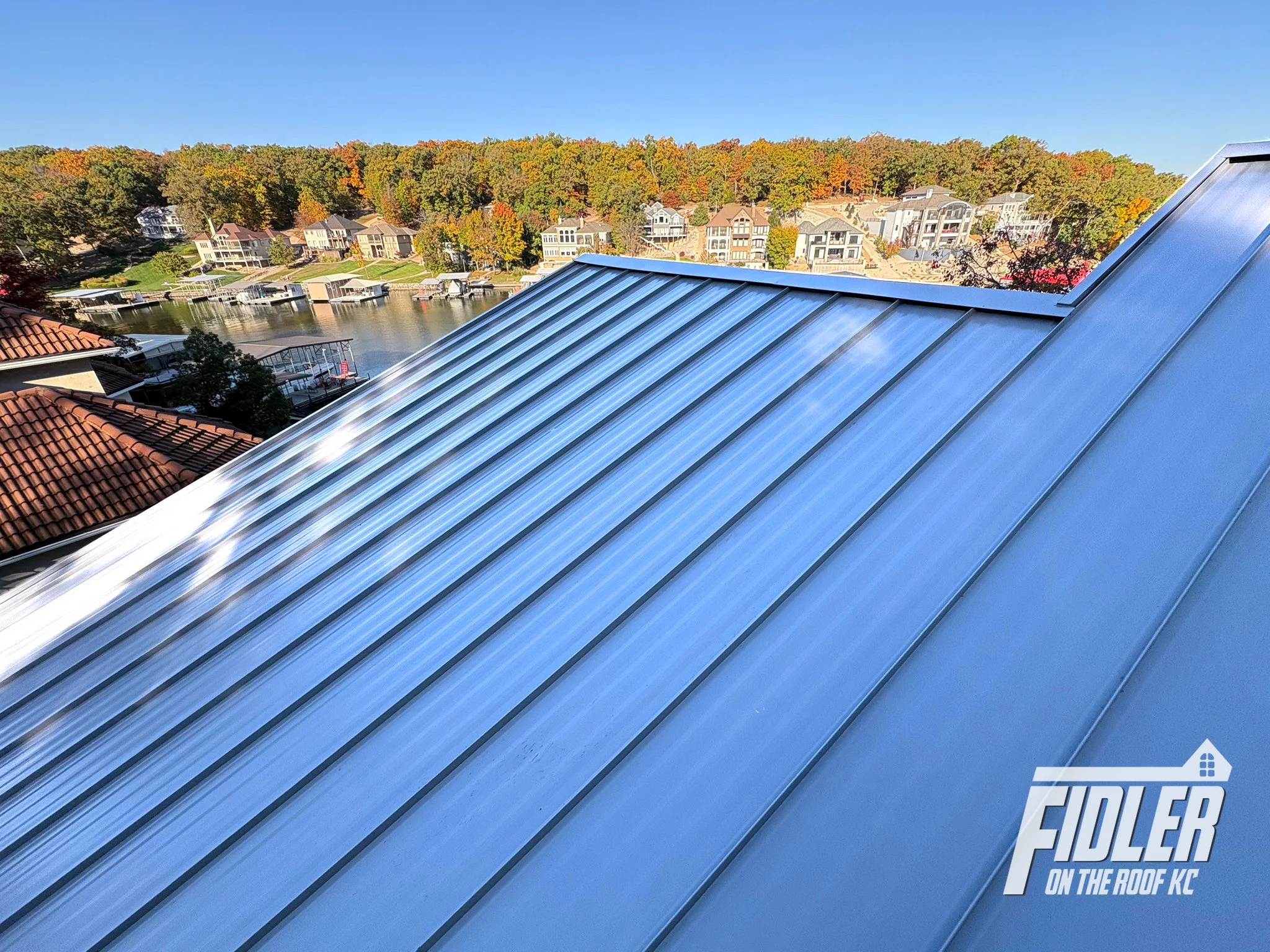
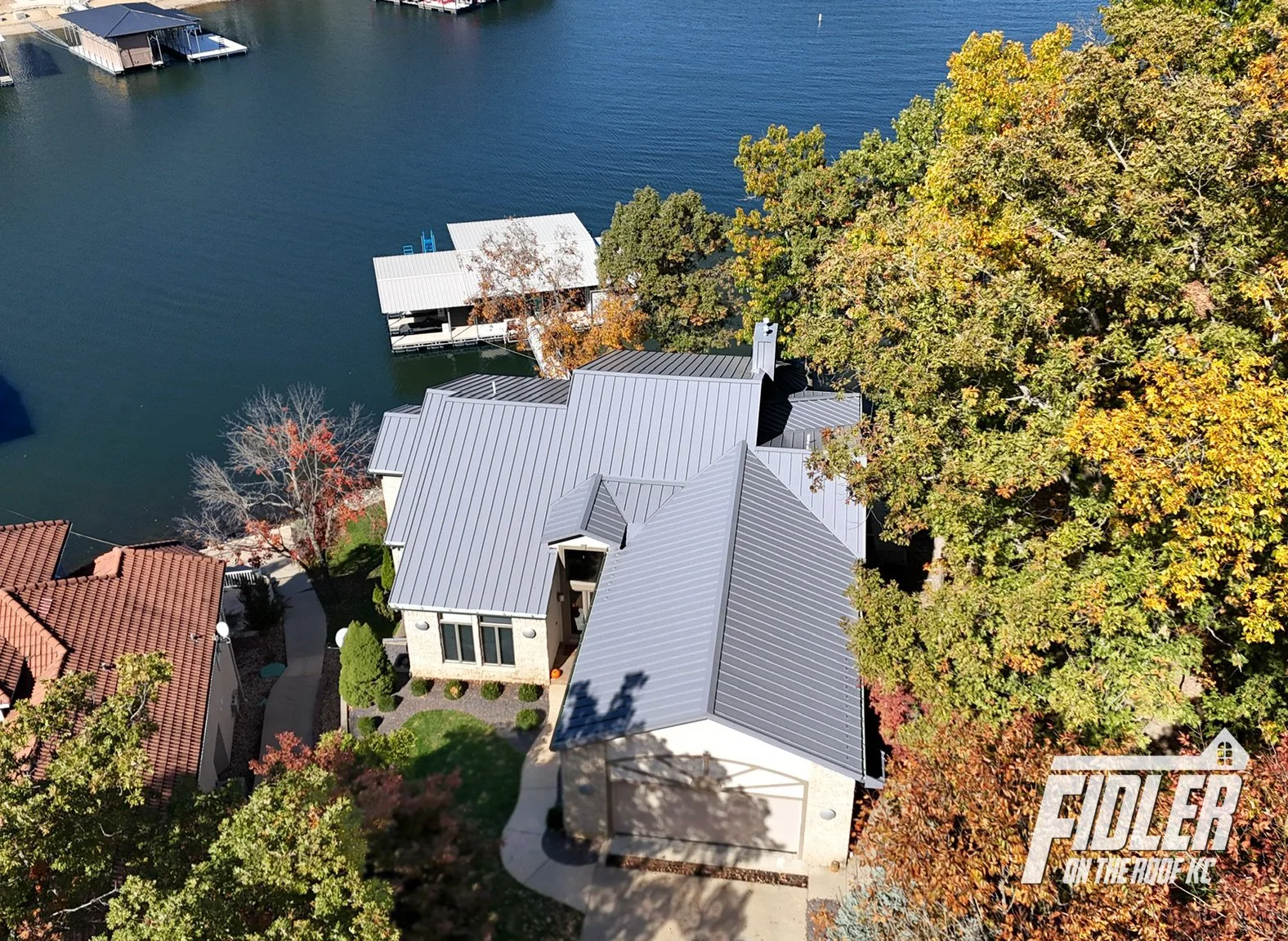
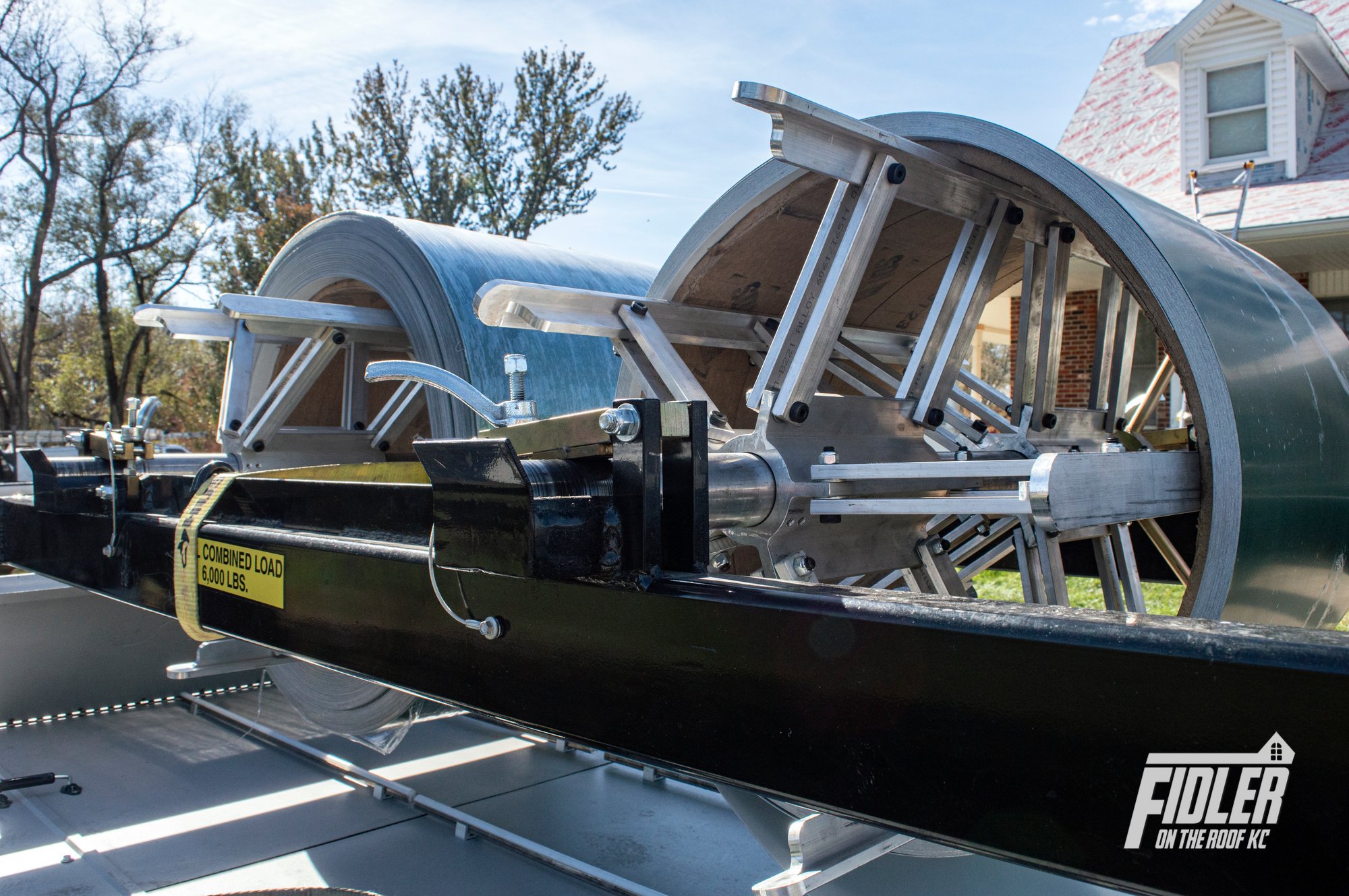
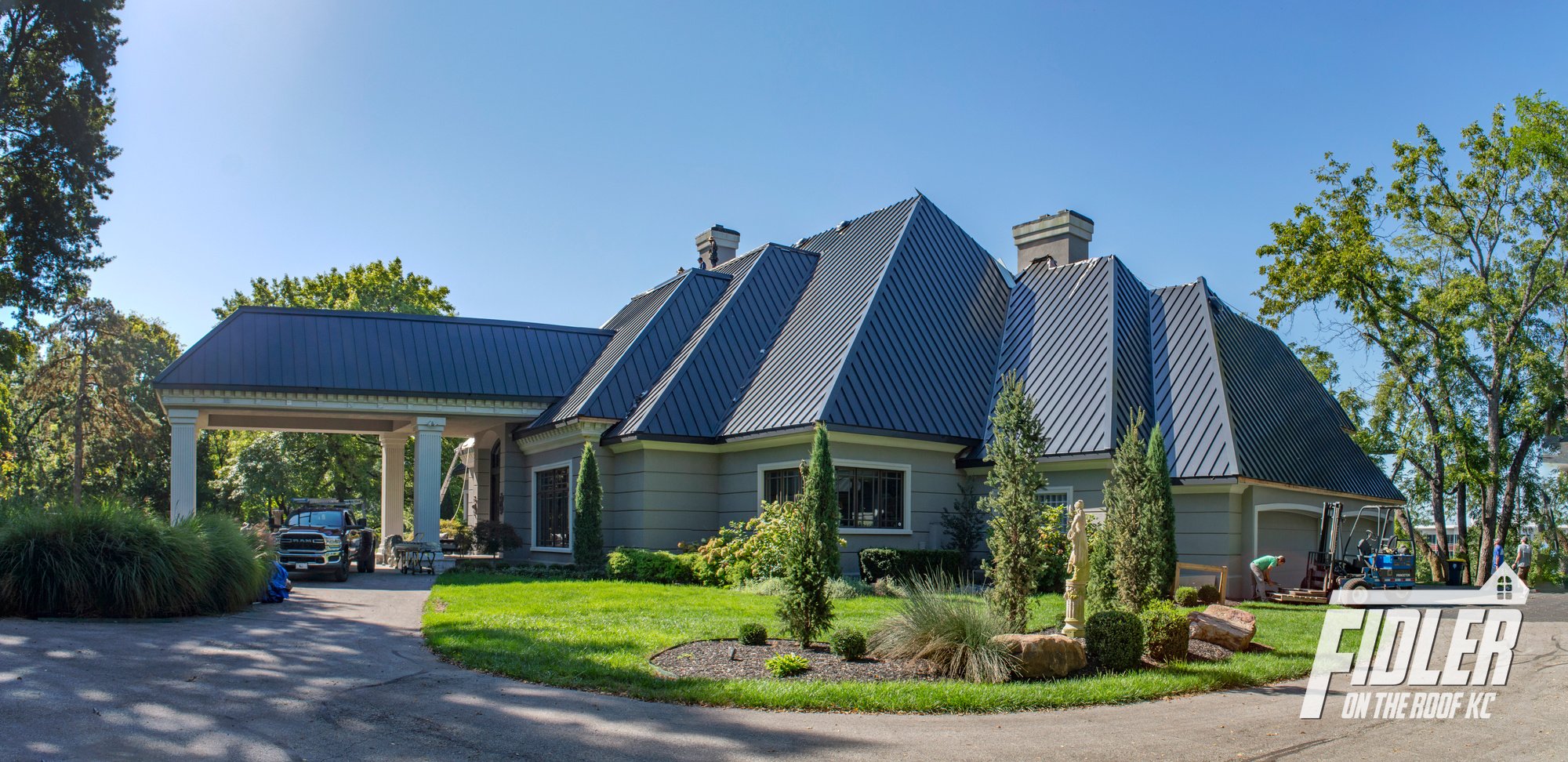
The words “metal roofing” can conjure images of warehouses or barns. While those are a few applications, they're not the only ones. Standing-seam refers a stylish and durable interlocking roofing system. Because the roofing is attached with hidden clips, there are no exposed screws or nails. Fasteners are concealed from sight and, therefore, from the elements. Homeowners like the minimalism and clean design. Standing-seam roofing is manufactured in a wide variety of colors and textures. In addition, these roofs last about twice as long as composition roofs, are low maintenance, and save energy. Fidler on the Roof KC owns standing-seam equipment and can custom fabricate panels on site, saving time and money.
Standing-seam vs. corrugated metal roofing
What’s the difference? All metal roofs are not equal. That makes sense because they have different purposes. The quality and appearance of a standing-seam metal roof is superior to that of a corrugated metal backyard barn or storage shed. Standing-seam roofs are manufactured with an intended lifespan of up to 60 years – significantly outlasting traditional corrugated roofing. Because standing-seam fasteners are concealed, they are not a failure point. With other metal roofing, exposed fasteners mean rubber washers erode and leak. In addition, standing-seam is built with curb appeal in mind. Homeowners choose this style not only for its durability, but for its sleek, modern design. In addition, standing-seam panels and geometric patterns can be customized to create distinct roof profiles.
Advantages of standing-seam roofing:
Lightweight and appropriate for any home or building
Durable, with twice the lifespan of composition roofs (up to 60 years)
Metal’s reflective qualities save energy by redirecting heat away from the roof.
Standing-seam roofs are highly fire resistant.
Panels can be fully recycled at their end of their lifetime.
Stone-coated steel roofing
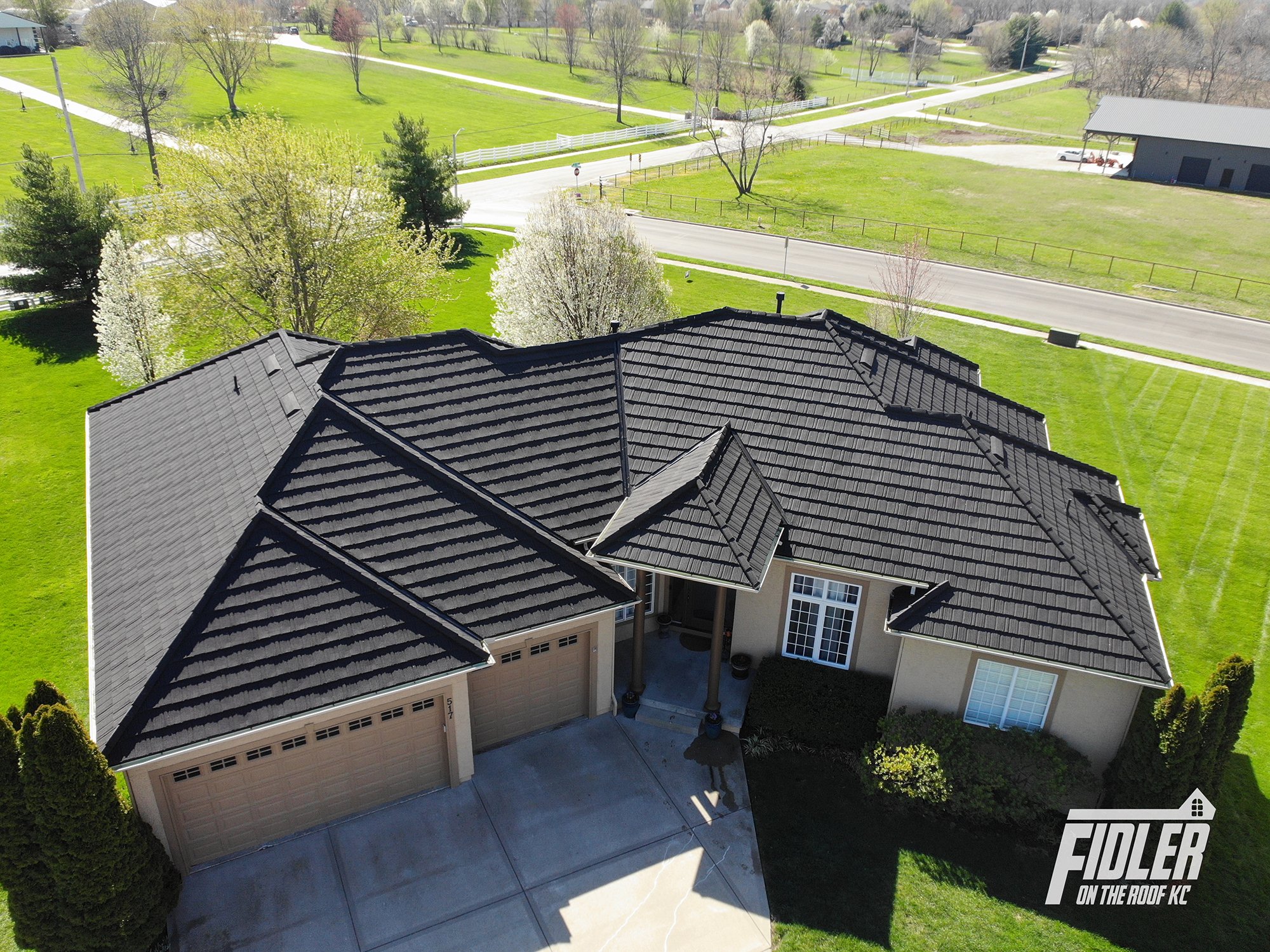
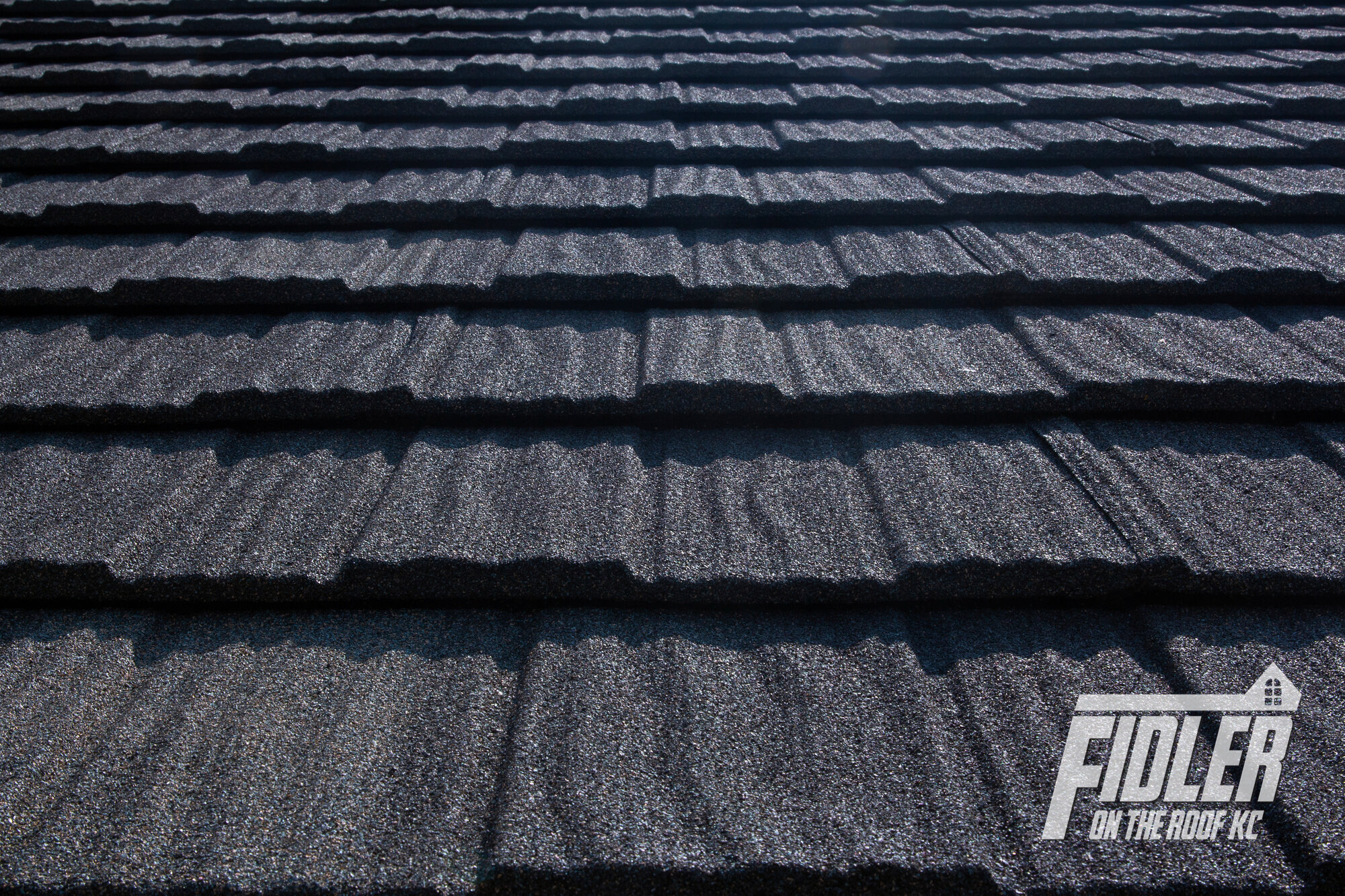
Stone-coated steel is exactly as it sounds: A stone finish is permanently adhered to a steel base, resulting in a lightweight, durable roof tile. Stone-coated steel is an excellent alternative for homes that are not structurally engineered to support a cement, slate or tile roof. This roofing material allows homeowners to obtain the look and feel of these surfaces and others – including wood-shake. Because stone-coated steel is engineered and manufactured, there are numerous possibilities for appearance, color and texture.
Benefits of stone-coated steel roofing
It can be used on any home and has no structural requirements. Actual stone-based products, such as concrete, clay and slate, require a roof to be structurally engineered to support their weight.
A stone-coated steel roof is exceptionally durable. The lifespan of steel roofs is about double that of composition roofs. Most have Class A fire-resistance ratings, the highest level.
Stone-coated steel roofing is low maintenance and energy efficient. Materials can be recycled at the end of the roof’s long life.
Stone-coated steel roofs can be customized to a wide variety of colors and styles and “pop” with curb appeal.
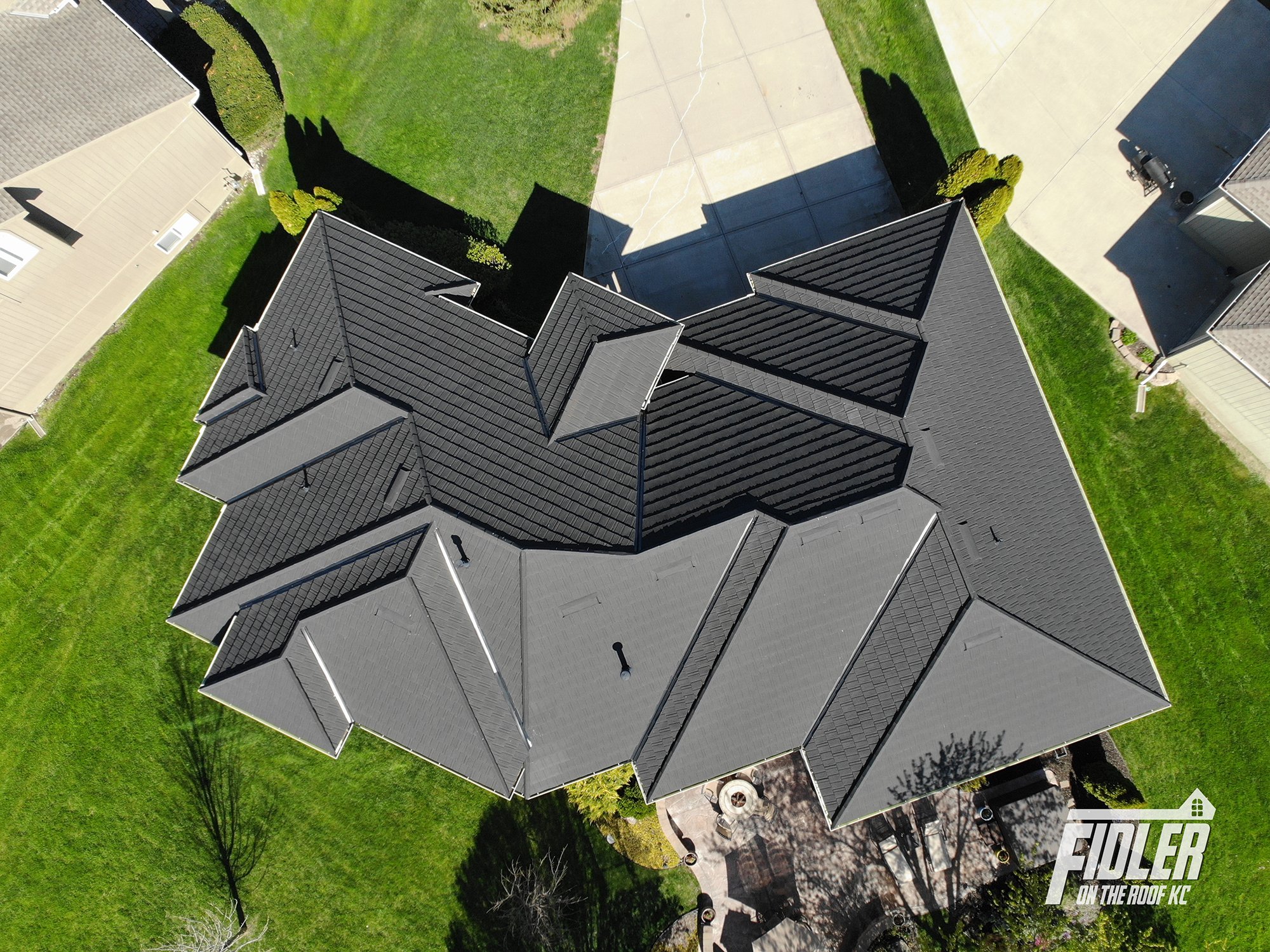
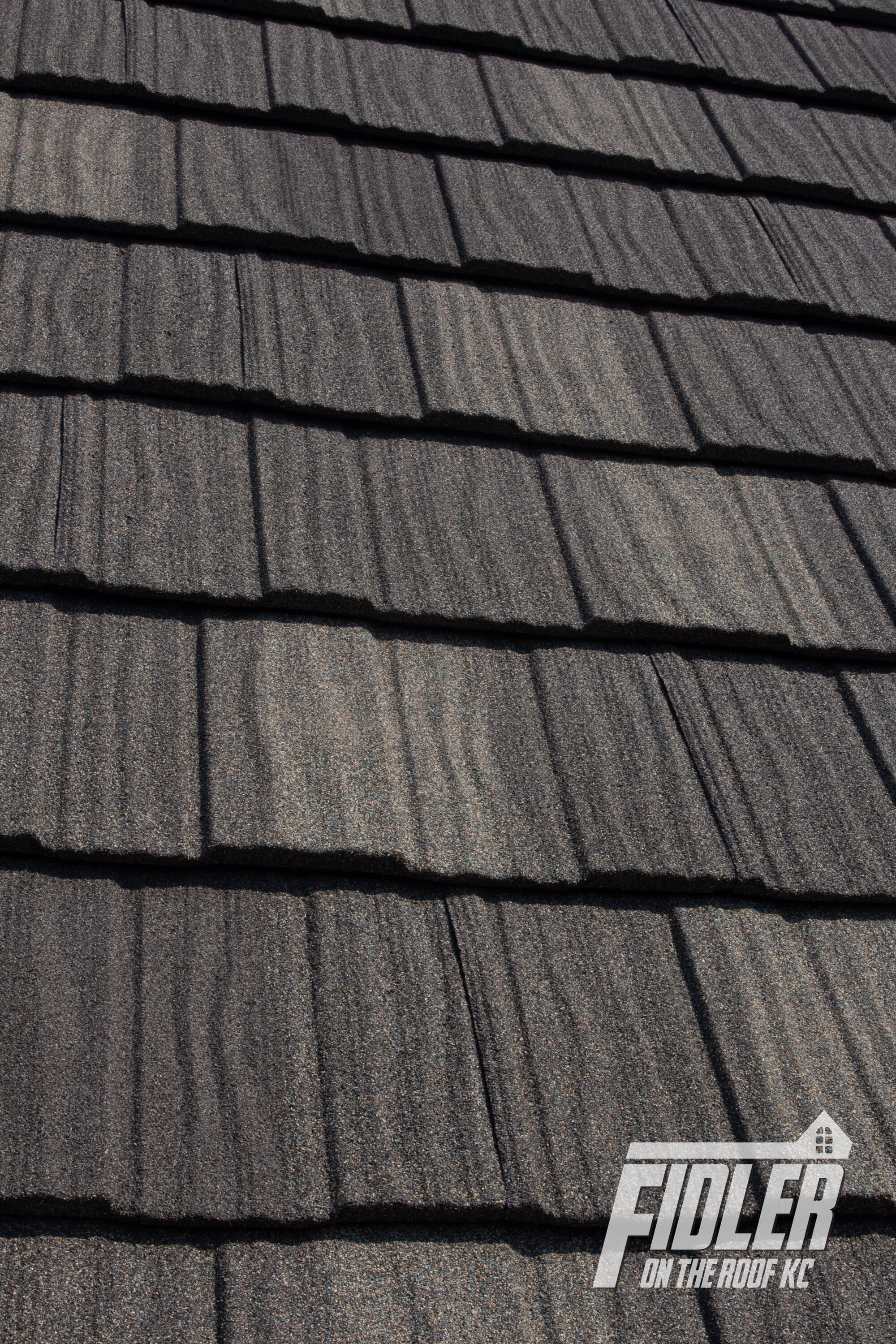
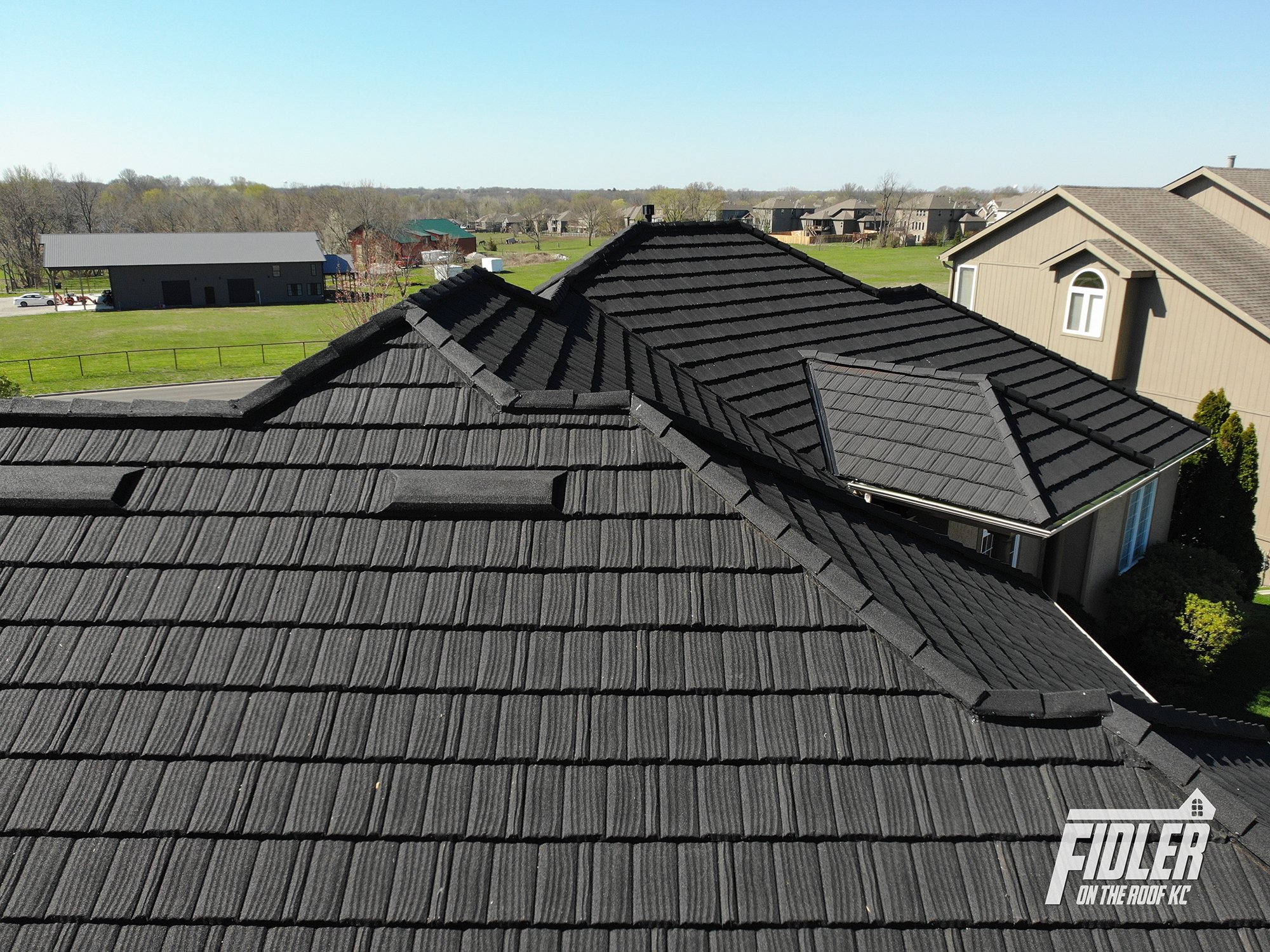
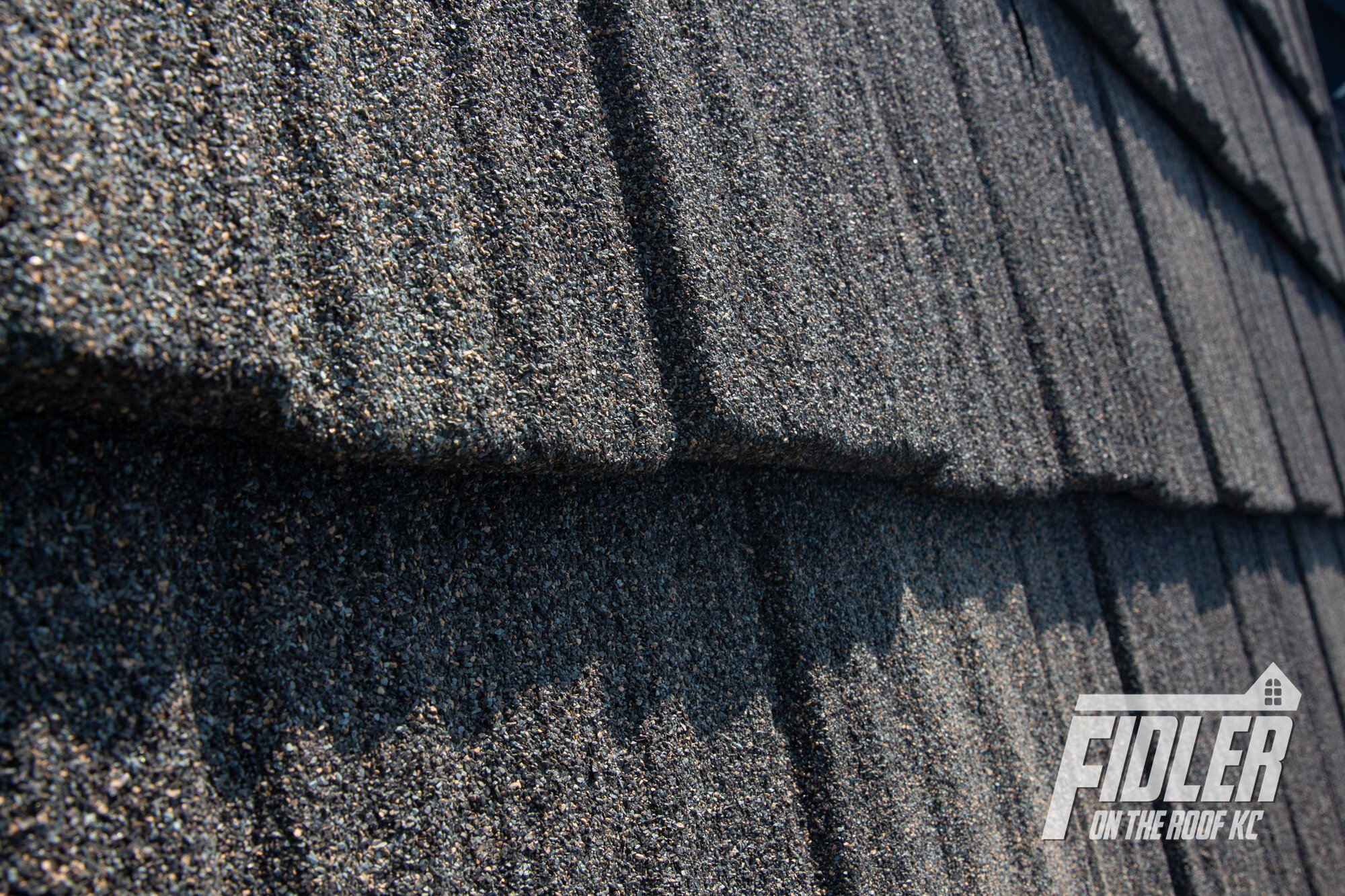
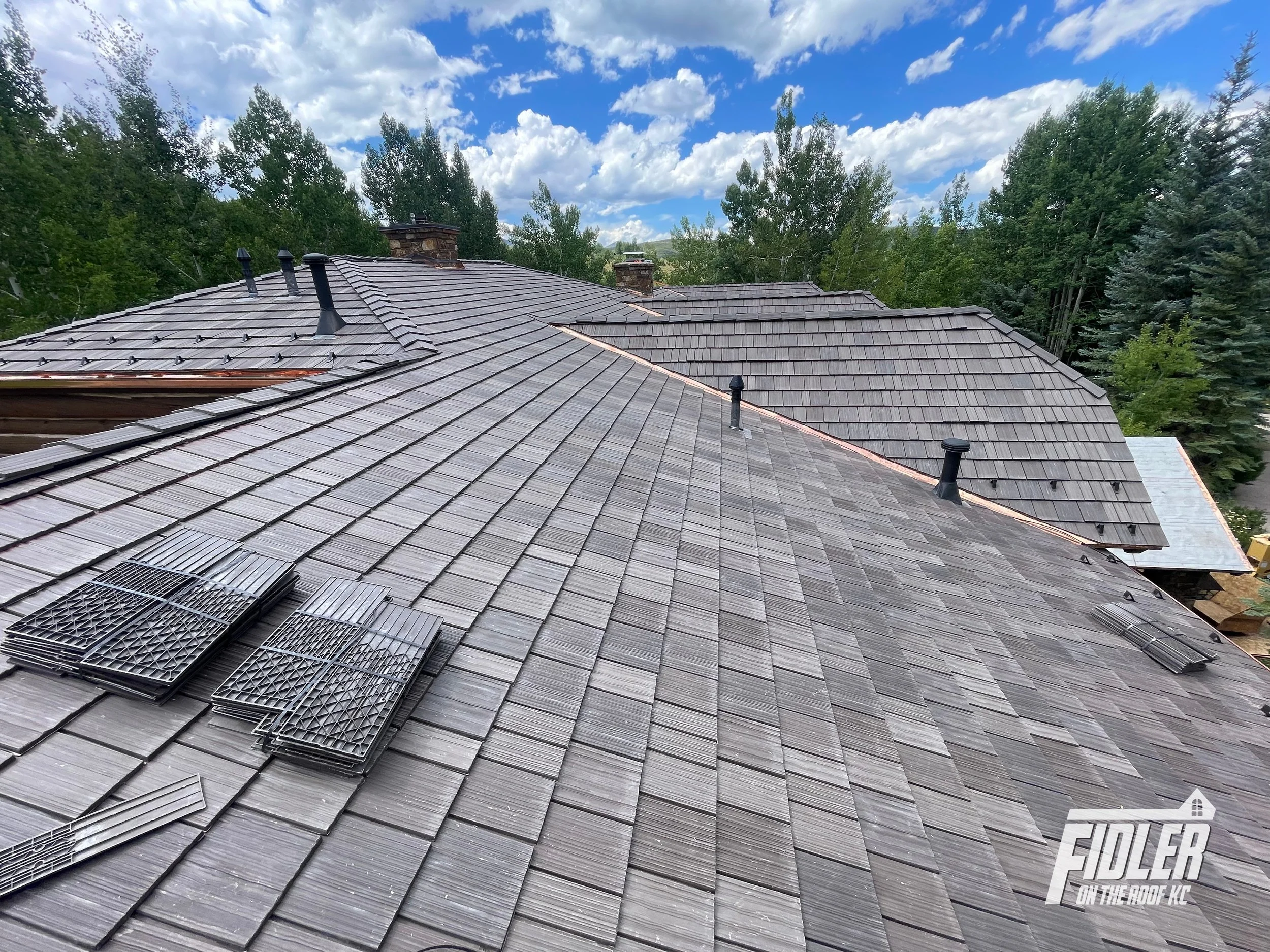
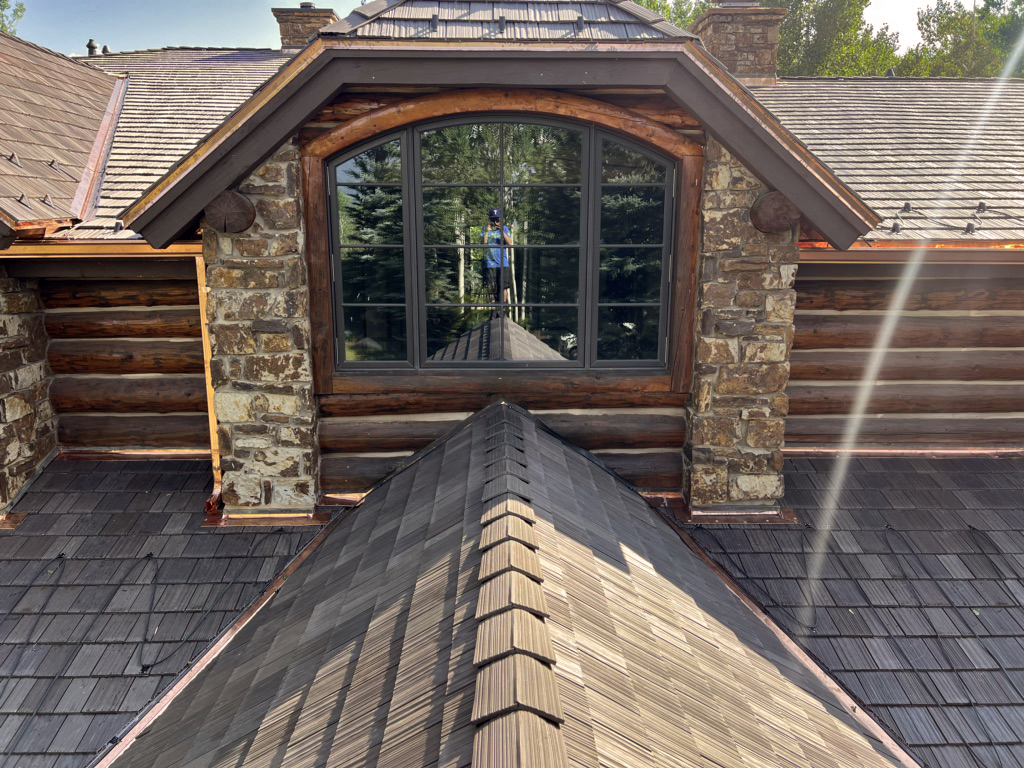
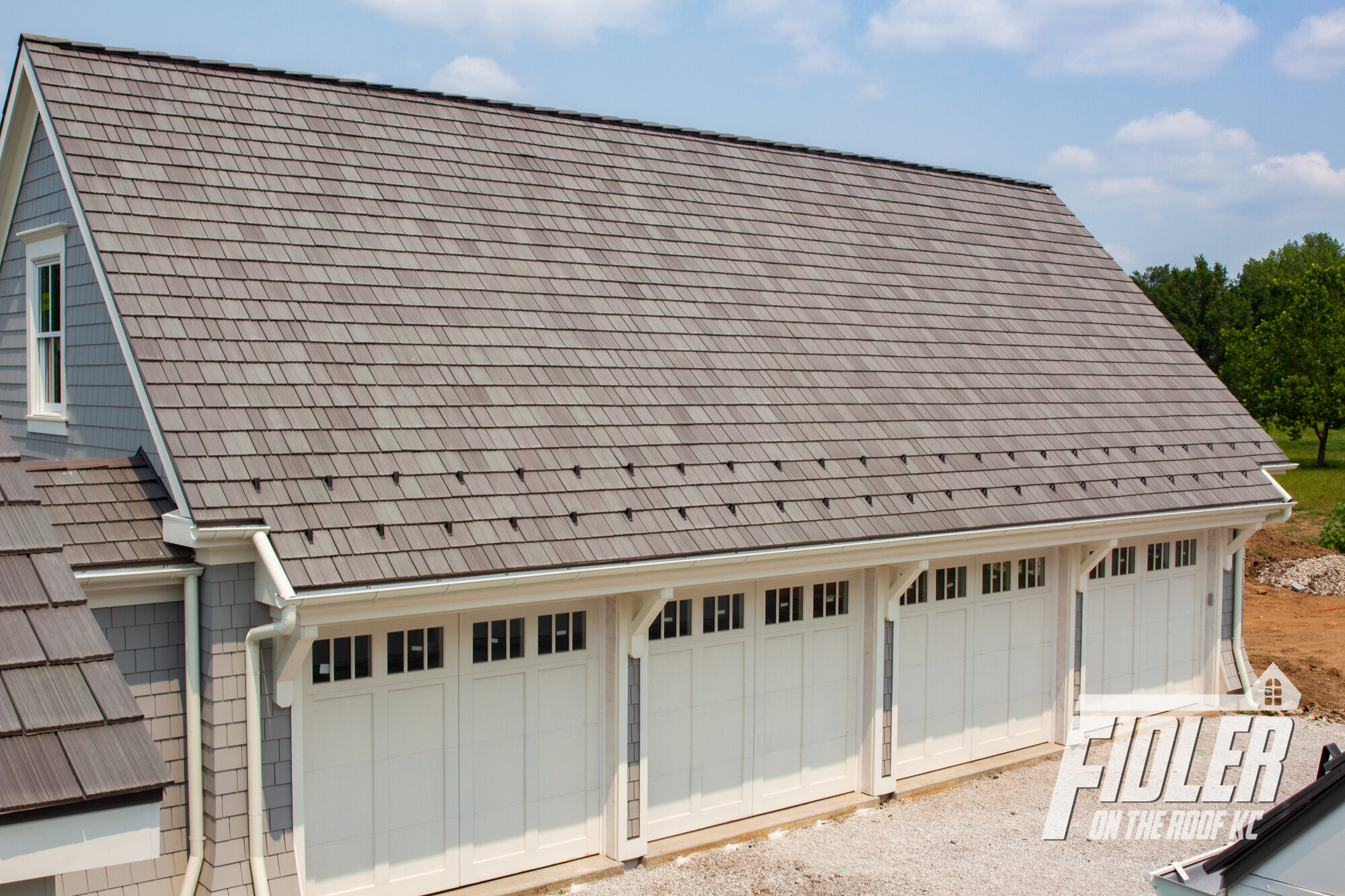
Shake Shingle roofing
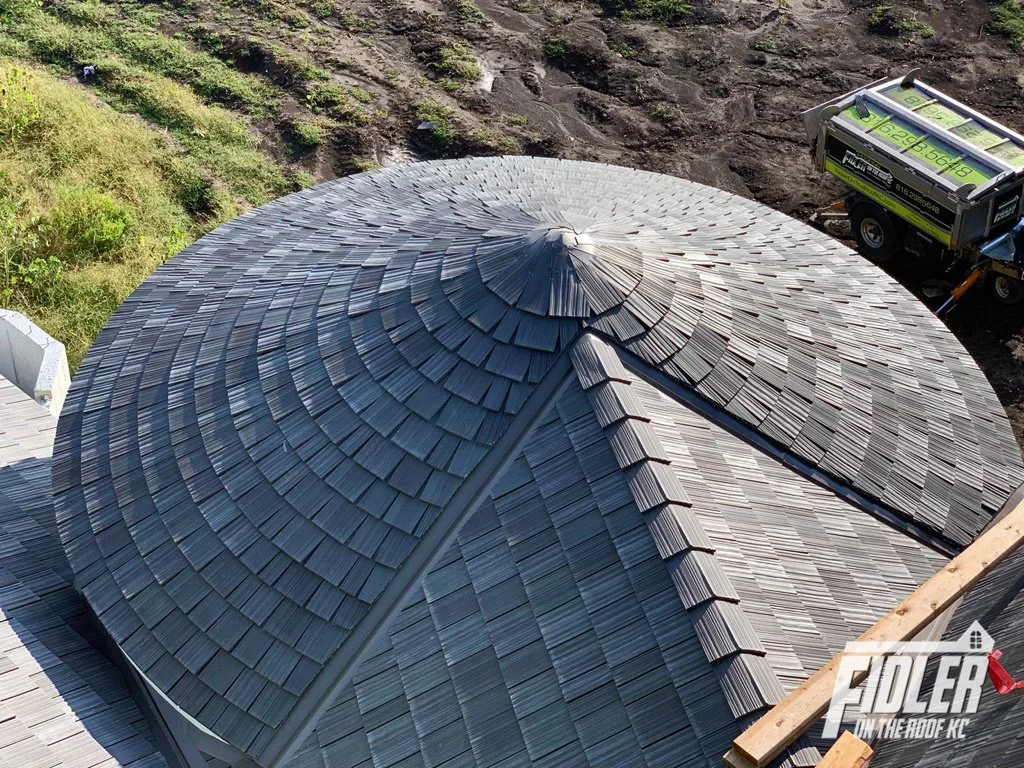
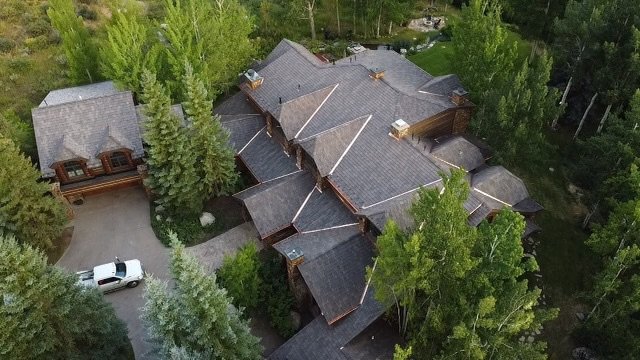
When technology allows roofing materials to evolve, a roof’s aesthetic beauty and curb appeal is only enhanced. This is the case with what is historically called wood shake roofing.
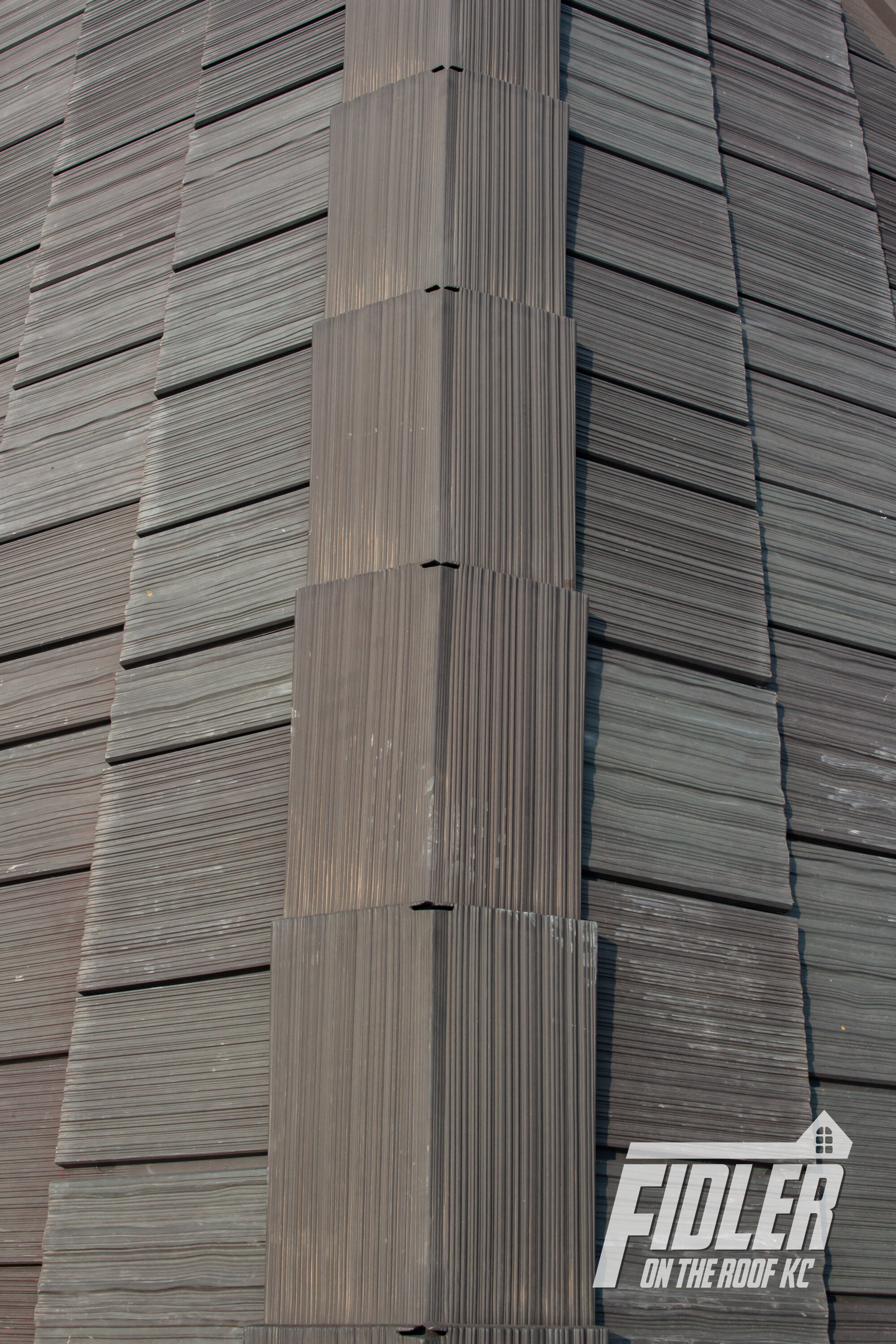
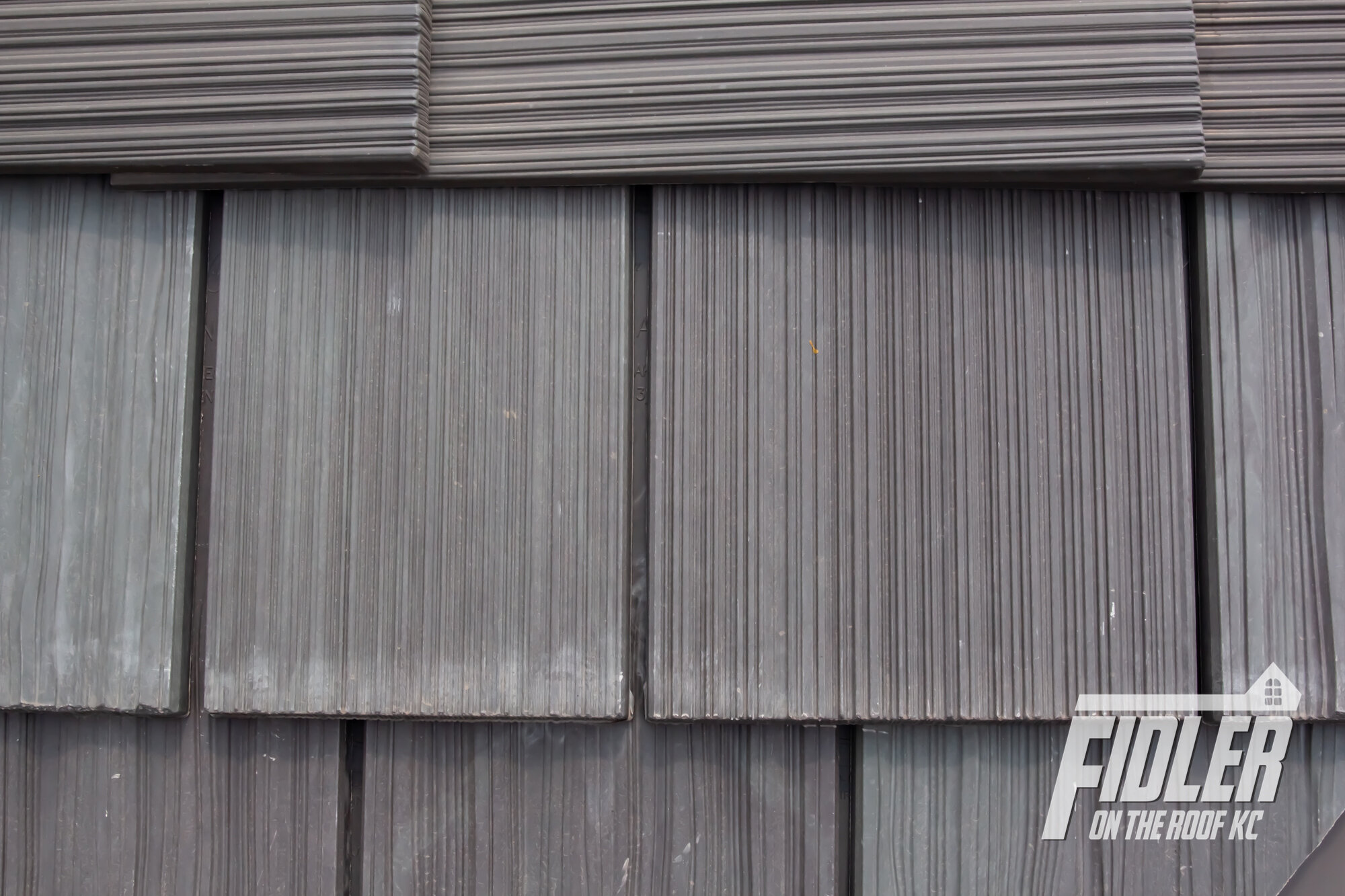
“Shake” historically refers to thick, textured wooden shingles. Before manufacturing, shakes were split from a block of redwood or cedar. The splitting action created the fibrous texture known as shake.
Wood shake is no longer used universally: Some communities or HOAs prohibit it as a fire risk. However, this doesn’t mean the organic, warm aesthetic of shake has disappeared. An alternative to wood is an equally appealing synthetic shake shingle. These durable tiles are made with polymers and from recycled materials. These shingles’ curb appeal equals or rivals wood shake.
In addition, synthetic shake is:
More budget-friendly than wood.
Retains its vibrant appearance, whereas the color of actual cedar fades.
Durable and fire resistant.
Extremely customizable in terms of color, texture and cut.
Can be recycled and has a lower carbon footprint than traditional roofing shingles, according to the National Park Service’s Sustainable Building Implementation Plan.
The park service also recommends use of synthetic roofing materials on its historic properties because “growing evidence indicates that with proper planning, careful specifications and supervision, substitute materials can be used successfully in the process of restoring the visual appearance of historic resources.”
Fidler on the Roof KC has been designated as Master Contractors by a premiere synthetic shake roofing manufacturer, DaVinci Roofscapes, headquartered in Lenexa, Kansas.
TPO commercial roofing
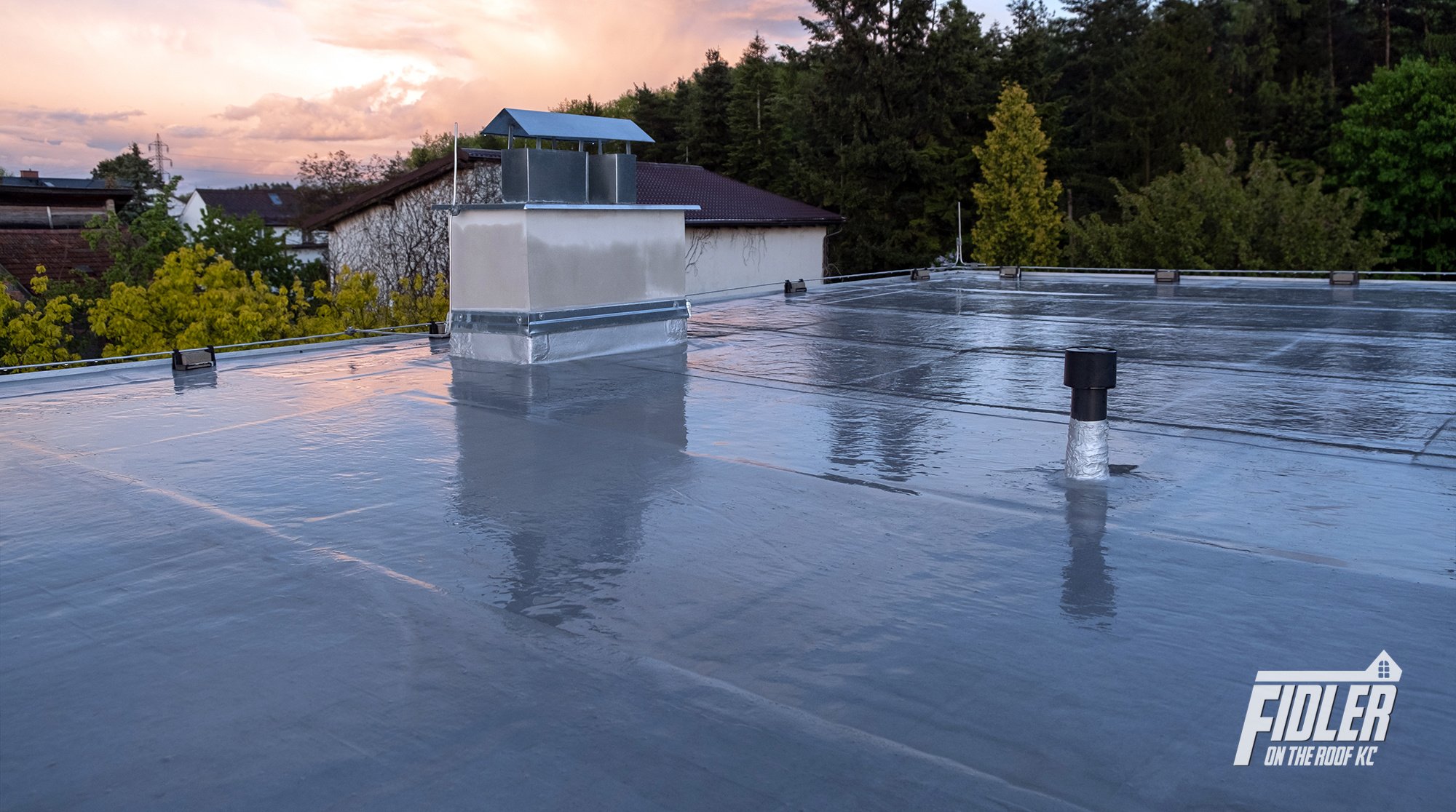
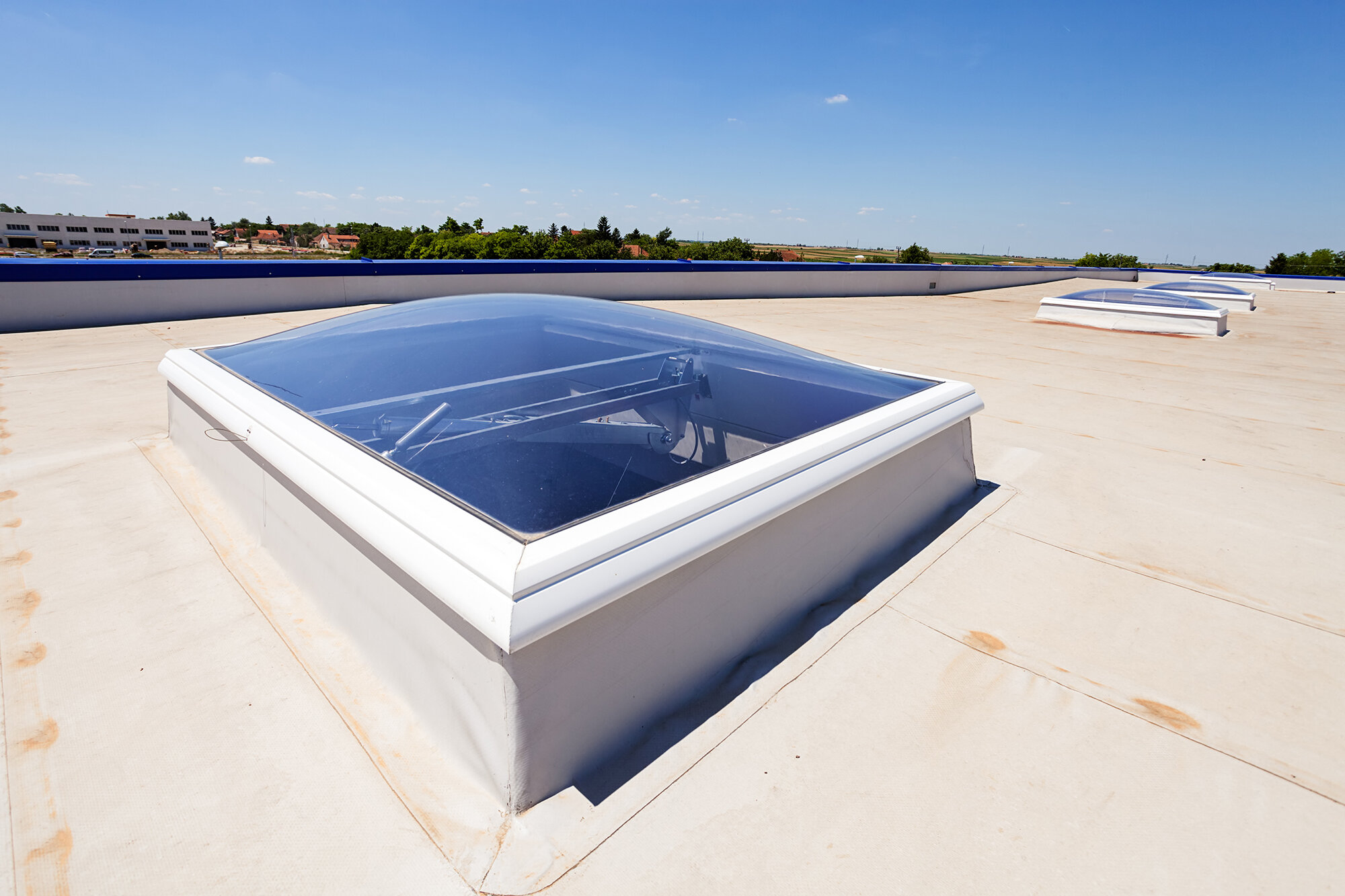
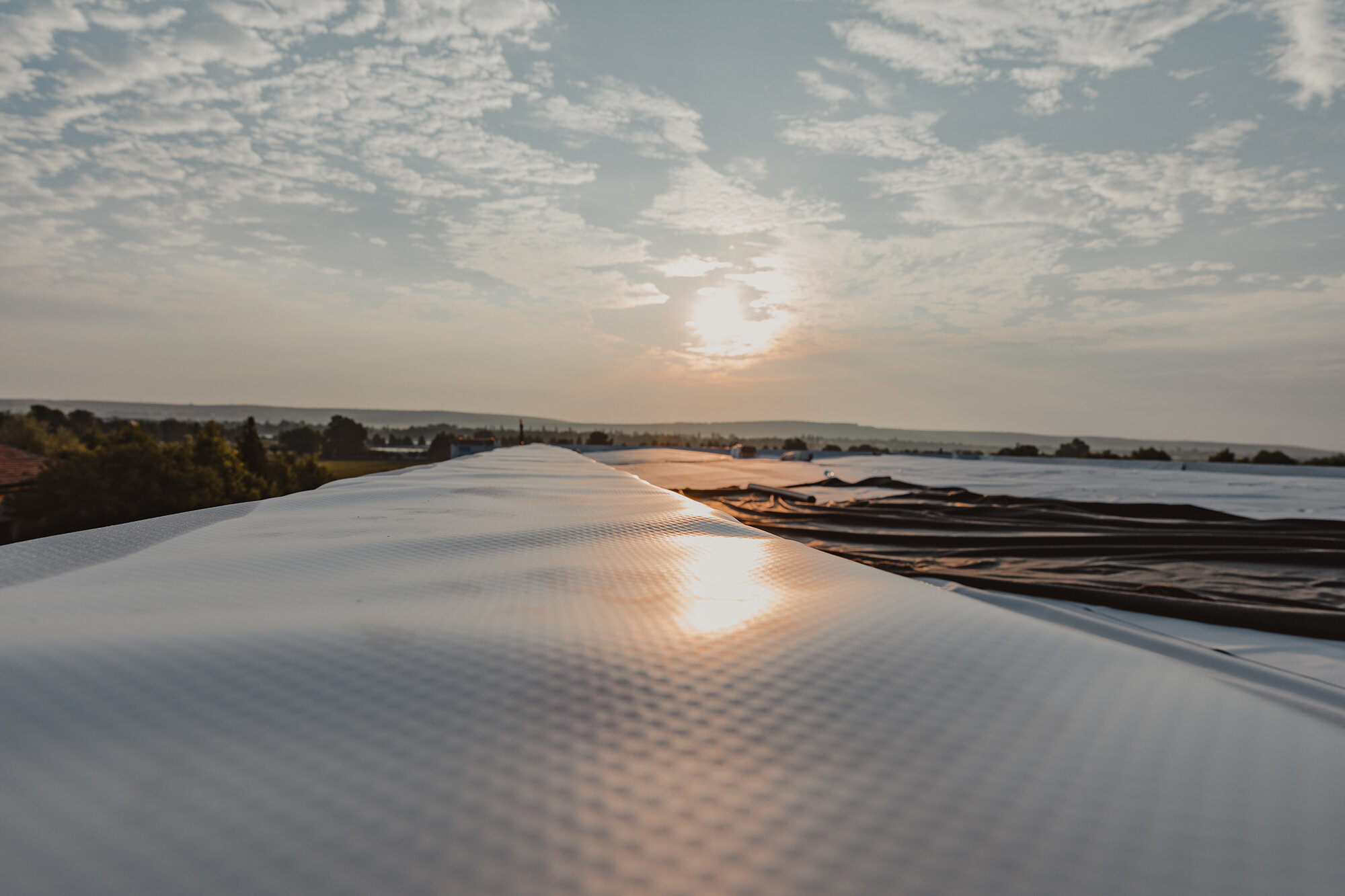
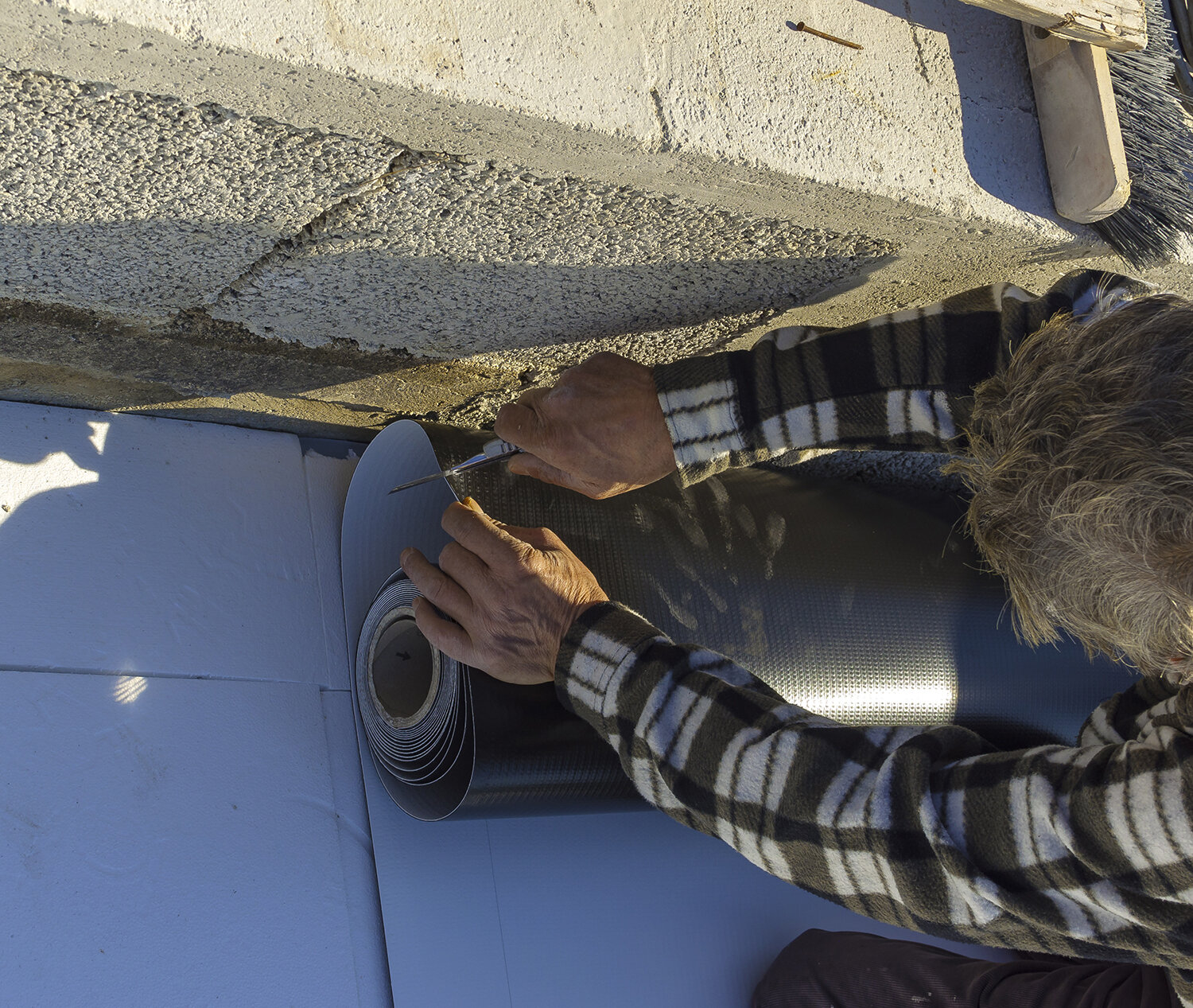
TPO stands for thermoplastic polyolefin, a manufactured surface usually installed on commercial and institutional buildings. Light TPO colors reduce heat and energy costs because of their reflective properties. This type of roofing is produced in large, rolled sheets and is ideal for flat surfaces. Seams are melded and sealed with heat. TPO is installed over an insulated membrane. In some instances, TPO may be used instead of a roof replacement.